
Laid Paper Labels · Creative papers
The paper a château label is supposed to be printed on
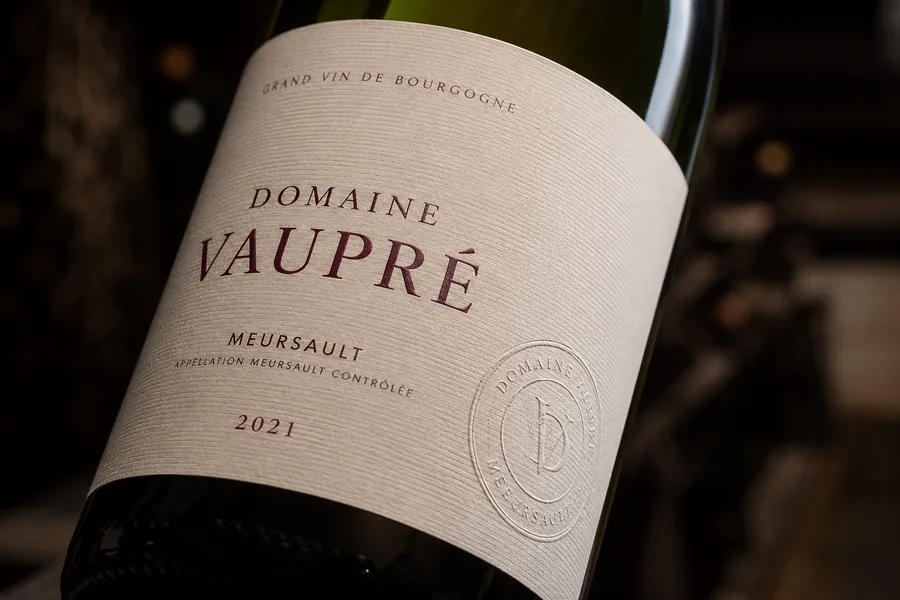
The short answer: laid paper carries fine parallel lines pressed into the sheet during manufacture — the texture of traditional writing paper. It is the stock buyers unconsciously associate with an estate, an old house and a serif typeface. White or cream, same price, from €205 per 100.
Any shape within this size — rectangle, round, oval or custom die-cut.
VAT invoice · card or bank transfer · proof before production · ±5 % quantity tolerance
- Printing
- 2 options
- Protection
- 1 option
- Adhesives
- 1
- Sizes
- 24 formats
- Smallest
- 35 × 30 mm
- Largest
- 150 × 105 mm
- Quantities
- 100 → 10 000, more quoted
- Variable data
- quoted on request
Printed from €205 per 100, unprinted on rolls from €66. Production 4 to 10 working days after proof approval.
Reading the grain
Lines that run one way
Laid paper has a direction. The ribbing runs parallel across the sheet, and on a label it should run the way the eye reads — horizontally on a front label, vertically only if the design asks for it. Tell us on the order and we cut accordingly; it is free, and it is the kind of detail nobody notices until it is wrong.
The texture also decides the typography. Fine hairlines and 5-point text sit in the grooves and lose definition; a slightly heavier serif, letterspaced capitals and engraved-style rules look better on laid than on any coated stock. Cream is the traditional choice for reds, white for whites and rosés — the tint costs nothing extra.
- Material
- Cream laid paper
- Size
- Up to 100 × 105 mm
- Printing
- Two colours
- Option
- Gold hot foil
- Protection
- None — texture kept
- Adhesive
- Permanent
- Quantity
- 1 000 labels
An example of a real order. Quantities are not capped — we print from a hundred pieces to several million.
Price by quantity
What a run actually costs
Up to 55 × 70 mm, full colour, unprotected — die, setup and printing included.
| Quantity | Run price | Per label |
|---|---|---|
| 100 | €213 | €2.13 |
| 200 | €216 | €1.08 |
| 300 | €220 | €0.73 |
| 500 | €220 | €0.44 |
| 1 000 | €238 | €0.24 |
| 1 500 | €248 | €0.17 |
| 2 000 | €265 | €0.13 |
| 3 000 | €291 | €0.097 |
| 5 000 | €358 | €0.072 |
| 10 000 | €523 | €0.052 |
Excluding VAT and delivery. Other sizes, finishes and quantities are priced in the configurator above.
Where it is used
Products that take this material
FAQ
Laid paper — what estates ask us
What is laid paper?
A paper whose surface carries fine parallel lines, an effect left by the roller during manufacture. It is the texture of traditional writing paper, and on a label it reads immediately as older, quieter and more expensive than a smooth coated stock.
White or cream?
Convention puts cream on red wines and darker spirits, white on whites, rosés and anything modern. Both cost the same, so it is a design decision only. A cream sheet also softens black type, which suits an engraved-style label.
Will it survive an ice bucket?
No. Laid is an uncoated paper: half an hour in melting ice and it wrinkles and lifts. For a wine served chilled, either accept that the label ages with the bottle, or use the wet-strength aquaproof paper — same paper feel, films behaviour, €184 per 100.
Does it take gold foil?
Yes, and the combination is the reason most people choose it. Foil is pressed into the texture and stays perfectly bright. Foil starts at 100 labels, so a private cuvée of eighty bottles is a normal order here.
Which way does the grain run?
Horizontally by default, which suits a front label read left to right. If your design needs it the other way, say so with the order — we cut it to match at no extra cost.
Two hundred years of wine labels cannot all be wrong.
Laid paper, white or cream, from €205 per 100.