
Polyethylene Labels · Synthetic & waterproof
When the container fights back
The short answer: polyethylene is the soft one. Where polyester is rigid and polypropylene follows a gentle curve, PE conforms to a moulded shoulder, a ribbed jerrican or a drum without lifting at the corners. Protected grade from £169 per 100, with a reinforced adhesive as the usual companion.
Any shape within this size — rectangle, round, oval or custom die-cut.
VAT invoice · card or bank transfer · proof before production · ±5 % quantity tolerance
- Printing
- 1 option
- Protection
- 2 options
- Adhesives
- 1
- Sizes
- 16 formats
- Smallest
- 35 × 30 mm
- Largest
- 100 × 105 mm
- Quantities
- 100 → 10 000, more quoted
- Variable data
- quoted on request
Printed from £169 per 100, unprinted on rolls from £57. Production 4 to 10 working days after proof approval.
Why softness matters
A rigid label on a curved surface is a countdown
Stick a stiff film onto a strongly curved or textured container and it fights the shape from the first minute. The middle holds, the corners lift, dirt gets under the edge, and within a season the label is hanging off — a failure mode blamed on the adhesive when it was really the face material.
Polyethylene solves it by giving in. It stretches slightly, follows the moulding and stays down. The protected grade adds a top coat so the print survives handling and cleaning; combined with a reinforced adhesive it is the standard specification for anything shipped in plastic containers.
- Flat and rigid
- polyester, £147
- Gentle curve
- polypropylene, £166
- Strong curve, moulded
- polyethylene, £169
- Squeezed in use
- matt PE, £165
- Adhesive
- reinforced recommended
- Protection
- top-coated grade
- Sizes
- up to 100 × 105 mm
Getting it to hold
Three conditions, and the material is only one
The surface must be clean and dry
Mould release agent on a new plastic container is the classic invisible culprit. Wipe it before labelling and the same adhesive suddenly works.
Apply above +10 °C
An adhesive needs to flow to grip. On a cold container it never wets the surface, and the label lifts a week later in a warm warehouse.
Press, do not lay
Reinforced adhesives build strength over the following 24 hours, but only where there was contact. A firm pass with the thumb doubles the bond.
Price by quantity
What a run actually costs
Up to 55 × 70 mm, full colour, gloss varnish — die, setup and printing included.
| Quantity | Run price | Per label |
|---|---|---|
| 100 | £180 | £1.80 |
| 200 | £183 | £0.92 |
| 300 | £187 | £0.63 |
| 500 | £190 | £0.38 |
| 1 000 | £209 | £0.21 |
| 1 500 | £222 | £0.14 |
| 2 000 | £241 | £0.12 |
| 3 000 | £271 | £0.093 |
| 5 000 | £345 | £0.069 |
| 10 000 | £528 | £0.053 |
Excluding VAT and delivery. Other sizes, finishes and quantities are priced in the configurator above.
Where it is used
Products that take this material
FAQ
Polyethylene — what customers ask us
What is the difference between polyethylene and polypropylene?
Softness. PP is bright, waterproof and follows a gentle curve — the drinks and cosmetics film. PE is more flexible and conforms to strongly curved, moulded or ribbed surfaces where PP would lift at the corners. PE also costs slightly more, at £169 against £166 per 100.
Does it work on drums and jerricans?
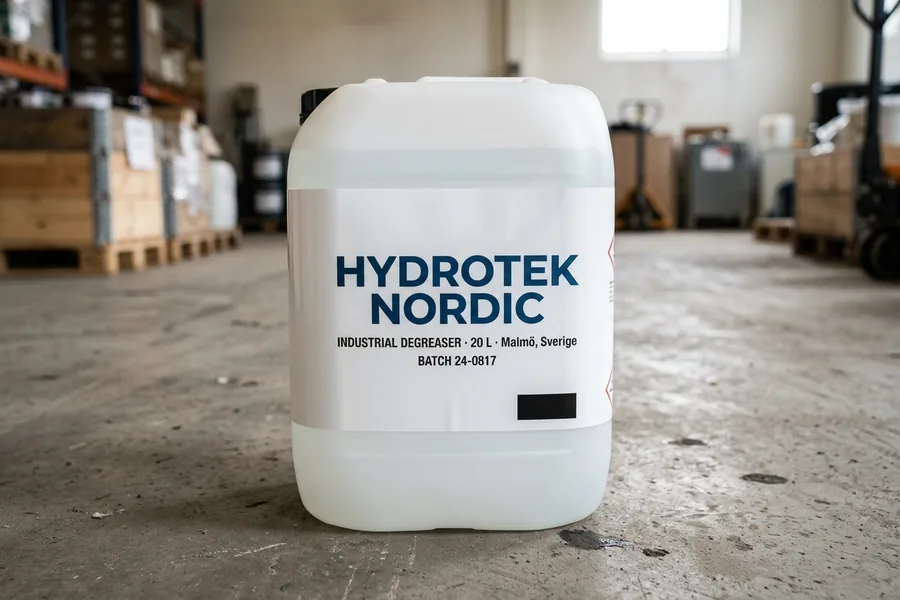
That is its main use. A large label on the curved shoulder of a 20-litre jerrican is exactly the case PE was made for, with a reinforced adhesive underneath. For hazard information on those containers, see chemical & GHS labels, where the CLP size rules apply.
Is the print protected?
On the protected grade, yes — it carries a top coat that resists handling, wiping and light abrasion. It is what separates it from the plain matt PE, which is softer still but leaves the ink more exposed.
Will it survive outdoors?
For a season or two rather than for years. For long outdoor exposure a laminated white polyester holds better against UV. PE earns its place on shape, not on weathering.
Can it carry batch numbers?
Not on this grade in the standard configurator. If you need variable data on a container label, white polypropylene and clear polyester both carry it — see numbered labels — or tell us the constraint and we look at the run.
The label follows the container, not the other way round.
Protected white polyethylene, from £169 per 100.