
Full-colour coated paper labels
Every colour, one price
The short answer: four-colour printing on coated paper reproduces photographs, gradients and as many colours as your design contains, for the same price as two. From £145 per 100, any die-cut shape at no extra cost, with a varnish or a lamination on top. If your brand rests on one exact colour, spot printing is both closer and cheaper.
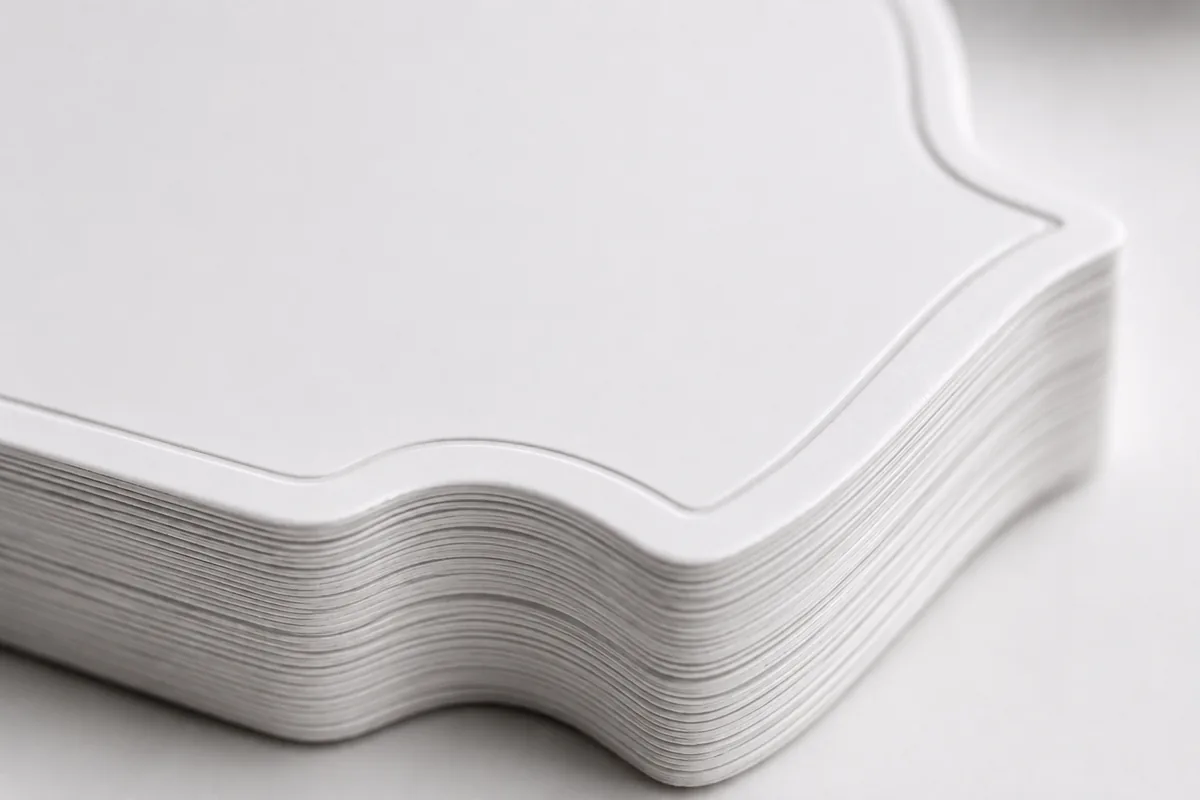
Price by size
What a full-colour run costs
Coated satin, unprotected, three common sizes — die, setup and printing included. The complexity of the artwork never enters the price.
| Quantity | 35 × 30 mm | 55 × 70 mm | 100 × 105 mm |
|---|---|---|---|
| 100 | £145 | £173 | £197 |
| 500 | £147 | £181 | £213 |
| 1 000 | £156 | £181 | £241 |
| 3 000 | £179 | £244 | £333 |
Excluding VAT and delivery. On a run of 100, add about £4 for a gloss varnish and £8 for a lamination. Above 10 000 labels, quantities are quoted at volume rates — up to millions.
When it is the right choice
Full colour earns its place — or it does not
When the design carries the product
Photographs of the food inside. Illustrated ranges where each flavour has its own artwork. Gradients and shading. Anything with more than two or three colours — beyond that, spot printing costs more, not less.
When it is not worth it
A logotype and three lines of text. A batch or information label. A brand built on one exact colour that four inks can only approach. In all three cases one or two colours is sharper on the page and about 23 % cheaper on the invoice.
The honest limit
Four inks cannot mix every colour
Cyan, magenta, yellow and black cover most of what a design needs, but not all of it. Strong oranges, deep royal blues, bright greens and every metallic reference sit outside the range four inks can reach — they come out close, and « close » is exactly what a brand owner notices first on a shelf.
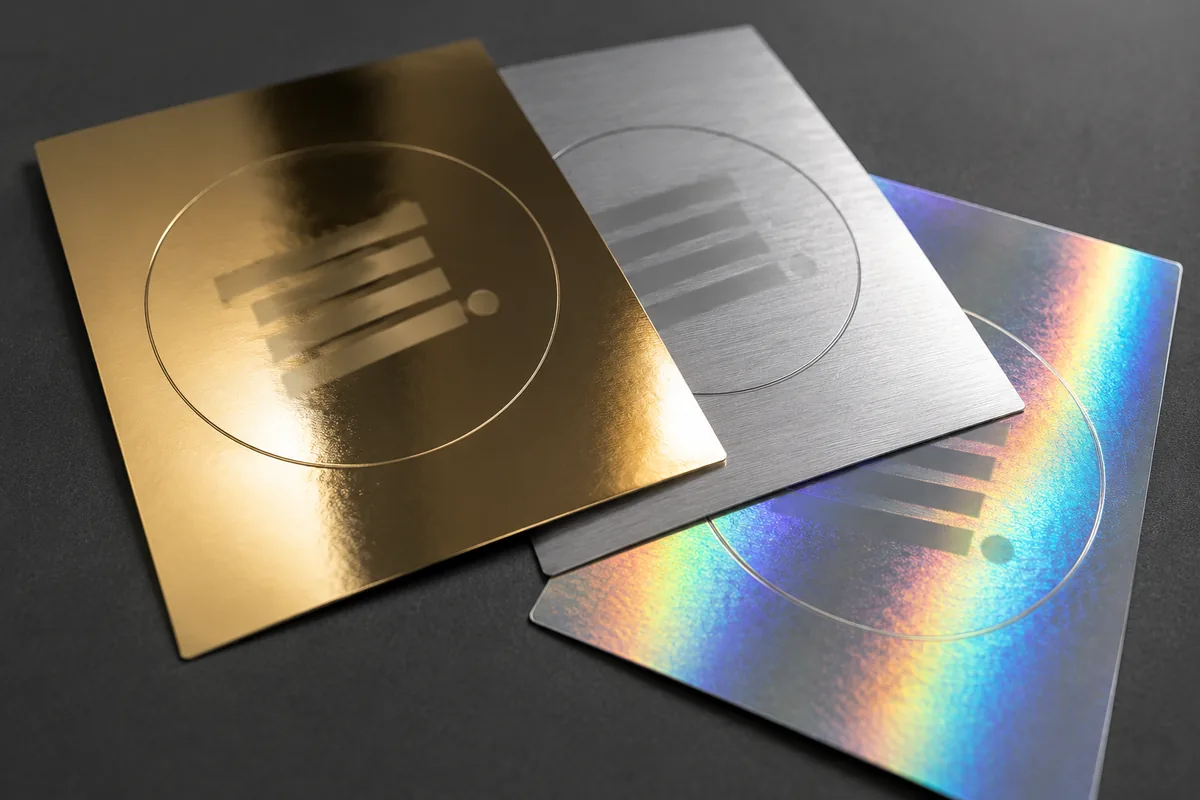
Two ways round it. Print the critical colour as a spot colour, mixed to the reference before it goes on the press. Or put the shine in the material rather than in the ink: a metallic stock or a hot foil does what no CMYK build can.
- Material
- Coated satin white
- Size
- 55 × 70 mm
- Printing
- Full colour, one design per flavour
- Finish
- Gloss varnish
- Adhesive
- Permanent
- Quantity
- 500 per flavour
- Run price
- £181 per flavour
An example of a real order. Quantities are not capped — we print from a hundred pieces to several million.
Files
What to send, and what we check
| Item | What we need | What we do if it is missing |
|---|---|---|
| Format | PDF, fonts embedded | We accept AI, EPS, PNG and JPEG too |
| Resolution | 300 dpi at final size | We flag anything that will look soft |
| Bleed | 3 mm beyond the cut | We extend the background where we can |
| Safety margin | 3 mm inside the cut for text | We move text in and show you on the proof |
| Colours | CMYK | We convert RGB and warn where a colour will shift |
| Cut shape | A path, or just tell us | We draw the die and show it on the proof |
Nothing here is a condition of ordering. Send the file you have — the proof exists precisely so that neither of us discovers a problem after printing.
Also available in full colour
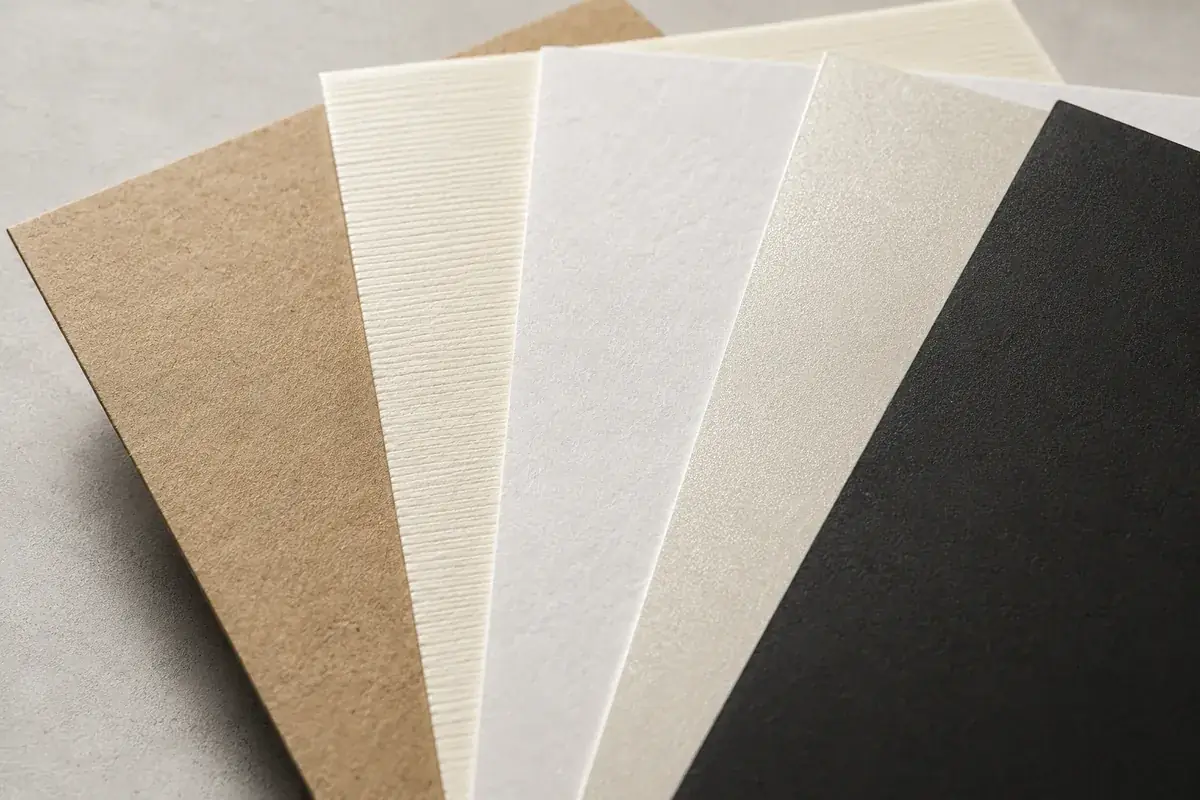
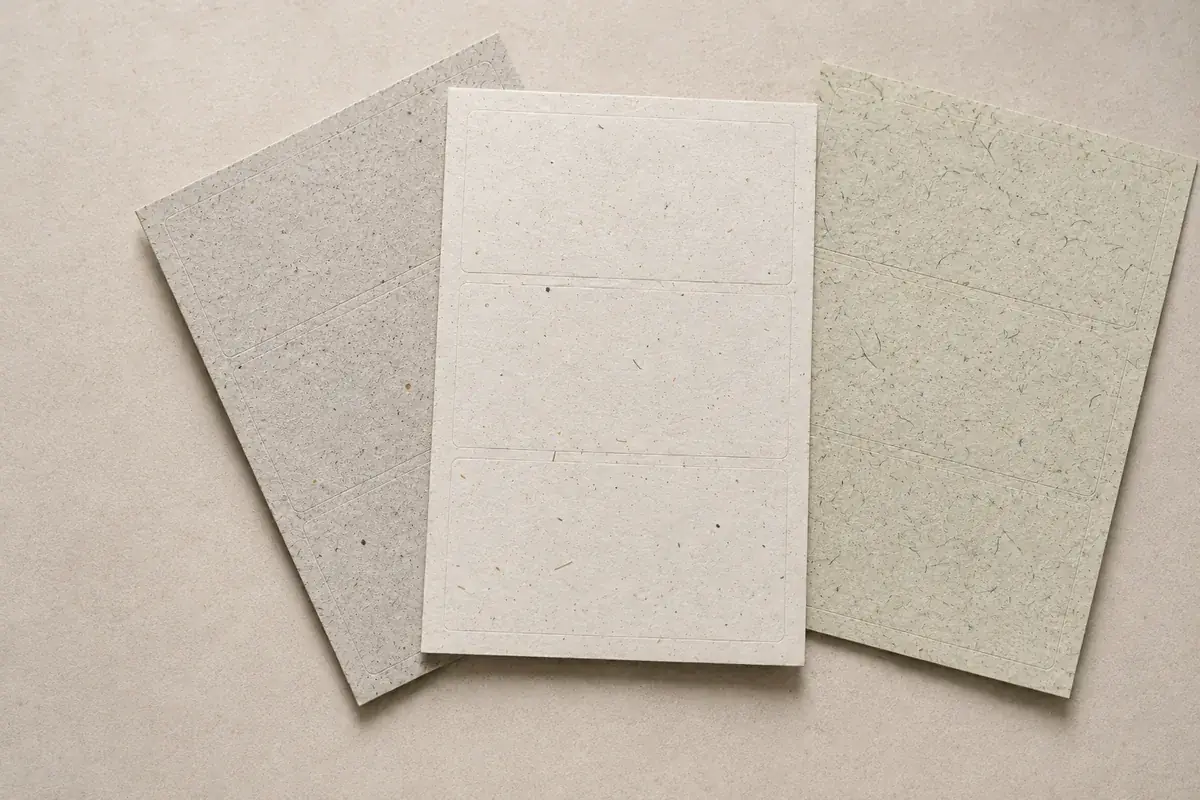
The same printing on other materials
FAQ
Full colour — what customers ask us
What does full colour actually mean?
Four inks — cyan, magenta, yellow and black — laid as fine dots that the eye mixes into every other colour. It is what lets a label carry a photograph, a gradient or twelve colours for the price of four, and it is why a full-colour run costs the same whether your design has two colours in it or two hundred.
Will my brand colour be exact?
Close, not identical. Four-colour printing reproduces most brand colours convincingly, but strong oranges, deep blues and metallic references sit outside what four inks can mix. If the colour is the brand — a drinks can, a house paint, a pharmacy range — print it as a spot colour instead, which is also cheaper.
Do I pay extra for more colours or a complex design?
No. A photograph costs the same as a flat background, and a die-cut shape costs the same as a rectangle. What changes the price is the material, the size, the finish and the quantity — never the complexity of the artwork.
What resolution should my file be?
300 dpi at final size for images, and text kept as text rather than as a picture of text. A PDF with 3 mm of bleed and fonts embedded is ideal, but send what you have — we check every file before the proof and tell you what we would change rather than printing a disappointment.
Does full colour need a varnish?
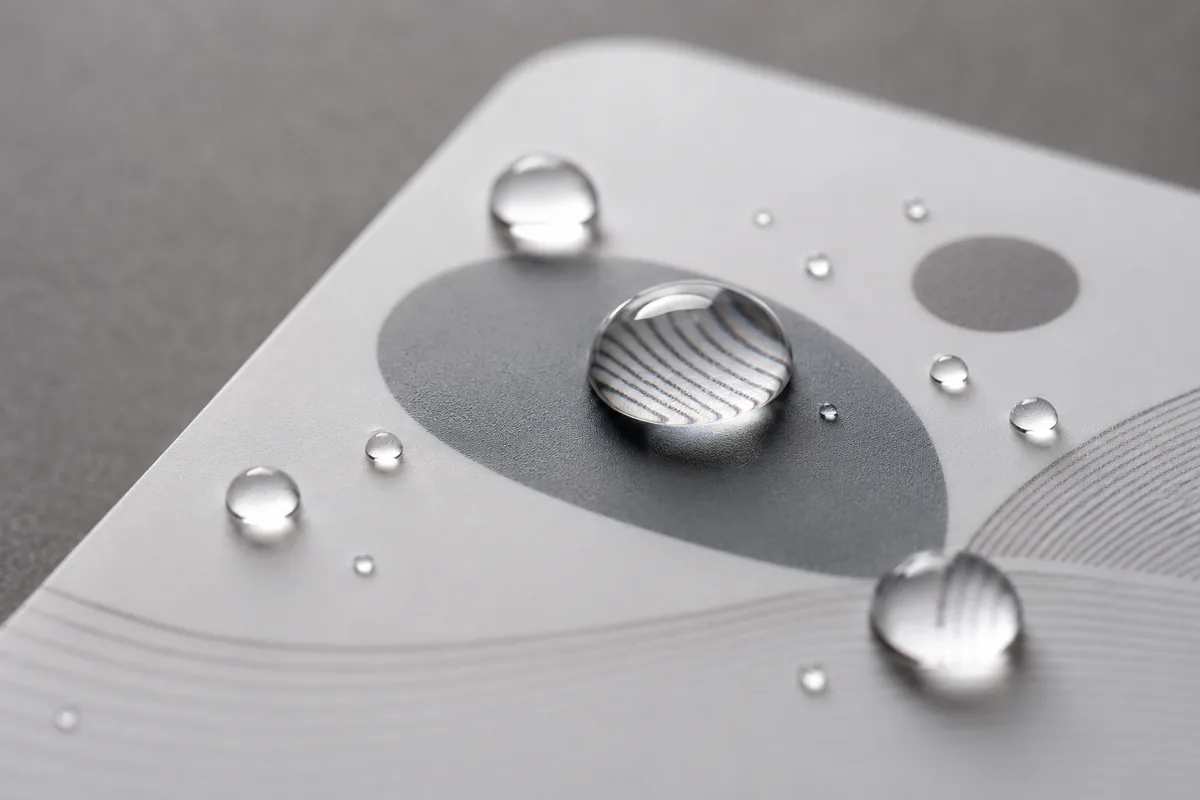
On paper it is optional but sensible: a gloss varnish adds about £4 on a run of 100 and protects the ink from marking. A lamination costs more, around £8 on the same run of 100, and is what you want if the label is handled daily or meets a little moisture.
Twelve colours or two — the price is the same.
Full-colour coated labels from £145 per 100.