
Varnished Labels · Coated paper
Five euros that keep a label looking new
The short answer: a gloss varnish is a coating printed onto the label in the same pass as the ink. It costs about £4 on a run of 100, stops the print marking under a thumb, and deepens the colours slightly. On a paper label that lives on a shelf, it is the right level of protection — nothing more is needed.
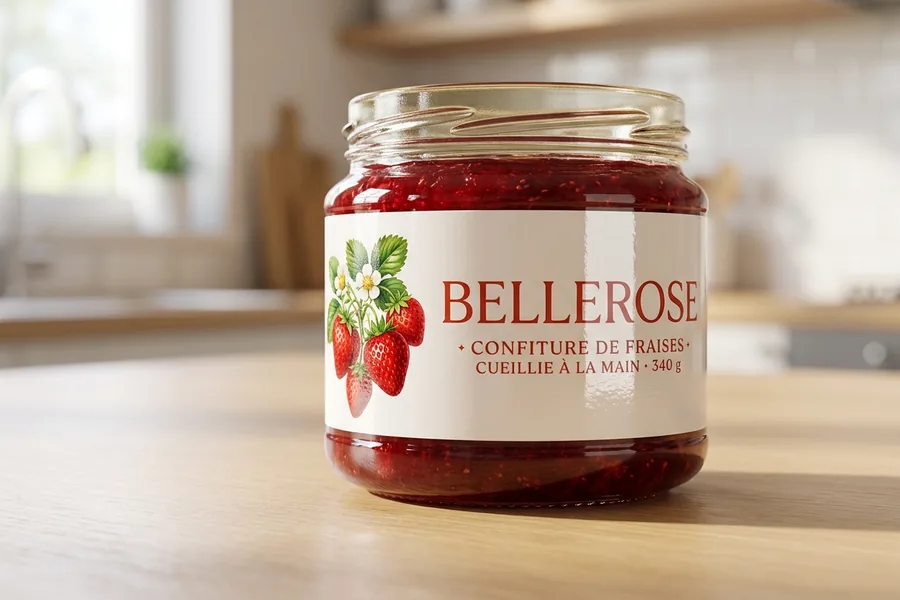
Any shape within this size — rectangle, round, oval or custom die-cut.
VAT invoice · card or bank transfer · proof before production · ±5 % quantity tolerance
- Printing
- 2 options
- Protection
- 1 option
- Adhesives
- 2
- Sizes
- 16 formats
- Smallest
- 35 × 30 mm
- Largest
- 100 × 105 mm
- Quantities
- 100 → 10 000, more quoted
- Variable data
- available
Printed from £116 per 100, unprinted on rolls from £37. Production 4 to 10 working days after proof approval.
Varnish or lamination?
The honest comparison
A varnish is ink-thin. It seals the printed surface against rubbing and light handling, and it is applied in the same pass — no extra material, no extra day of production. On coated satin at 55 × 70 mm, it takes a run of 100 from £173 to £177.
A lamination is a real film pressed over the print: about £8 on the same run of 100, tougher, and the only one of the two that copes with daily handling, wiping or a damp environment. Neither makes paper waterproof — that is a change of material, not of coating.
- Resists rubbing
- yes
- Resists fingerprints
- yes
- Resists daily handling
- lamination
- Resists water
- synthetic film
- Changes the feel
- slightly glossier
- Adds production time
- none
- Cost on 100 labels
- about £4
Where it does not belong
Three labels that must stay unvarnished
The panel you overprint
A varnish over the free area stops the thermal head marking the paper. The label comes out blank — the most common mistake on overprintable rolls.
Textured papers you want to feel
A varnish flattens the grain of a kraft or a Tintoretto. On those stocks it is offered, but most producers refuse it on purpose.
Labels written on by hand
Ink and pencil slide off a varnished surface. For labels filled in at the counter, leave the stock bare or ask for a writable paper.
Price by quantity
What a run actually costs
Up to 55 × 70 mm, one or two colours, gloss varnish — die, setup and printing included.
| Quantity | Run price | Per label |
|---|---|---|
| 100 | £136 | £1.36 |
| 200 | £139 | £0.70 |
| 300 | £142 | £0.47 |
| 500 | £143 | £0.29 |
| 1 000 | £158 | £0.16 |
| 1 500 | £167 | £0.11 |
| 2 000 | £181 | £0.093 |
| 3 000 | £202 | £0.067 |
| 5 000 | £255 | £0.051 |
| 10 000 | £387 | £0.039 |
Excluding VAT and delivery. Other sizes, finishes and quantities are priced in the configurator above.
FAQ
Varnish — what customers ask us
How much does a varnish add to my price?
About £4 on a run of 100 — on coated satin at 55 × 70 mm, a run goes from £173 to £177. From 500 labels the varnish is included in the run price: at 3 000, both run at £244. It is the cheapest protection we sell and, on paper, usually the only one needed.
Gloss varnish or matt lamination?
They are not the same category. The varnish protects lightly and adds shine for a few euros; a matt lamination costs about £8 more per 100, kills reflections and survives real handling. If the choice is about looks rather than protection, the varnish is gloss only — matt means lamination.
Does a varnish protect against water?
No. It seals the ink, not the paper. A varnished paper label in a fridge or an ice bucket still swells and lifts — for that you need a synthetic film, from £147 per 100.
Is it applied over the whole label?
Yes on this option — an overall varnish. A varnish applied only where you want it, to make a logo shine against a matt background, is a different finish: selective varnish, listed with the other options.
Can I have a varnish on a numbered label?
Yes. Varnish and variable data coexist on coated papers — the numbering is printed in the same run, under the varnish, so it cannot be rubbed off either.
The cheapest way to keep a label looking printed yesterday.
Gloss varnish, added in the same pass — about £4 per 100.