
Asset tracking labels
An asset register is only as good as the label on the asset
The short answer: a printed polyester with a reinforced adhesive, carrying a unique number and a scannable code, is the specification for almost every asset. Aluminium film when it has to look like a manufacturer's plate, destructible film when it must never be moved to another item. From 100 labels, numbers printed in the run.
Materials
Four asset labels, four intentions
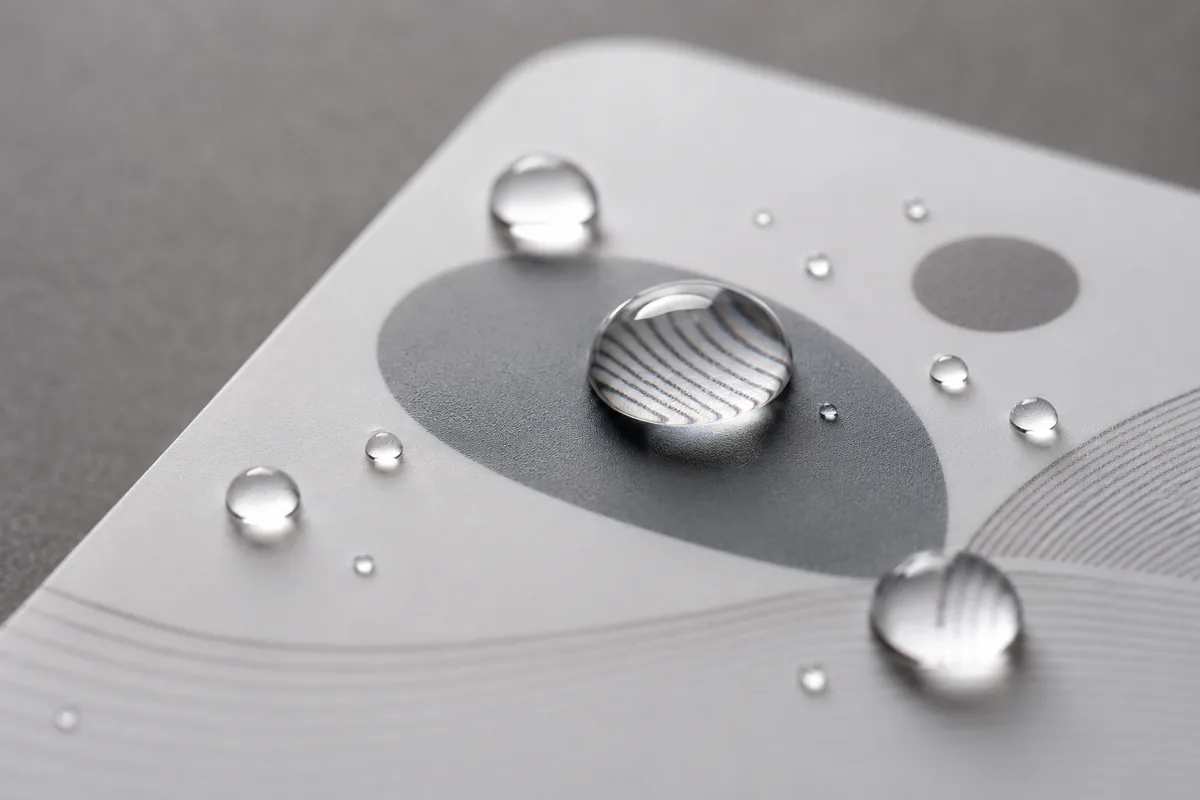
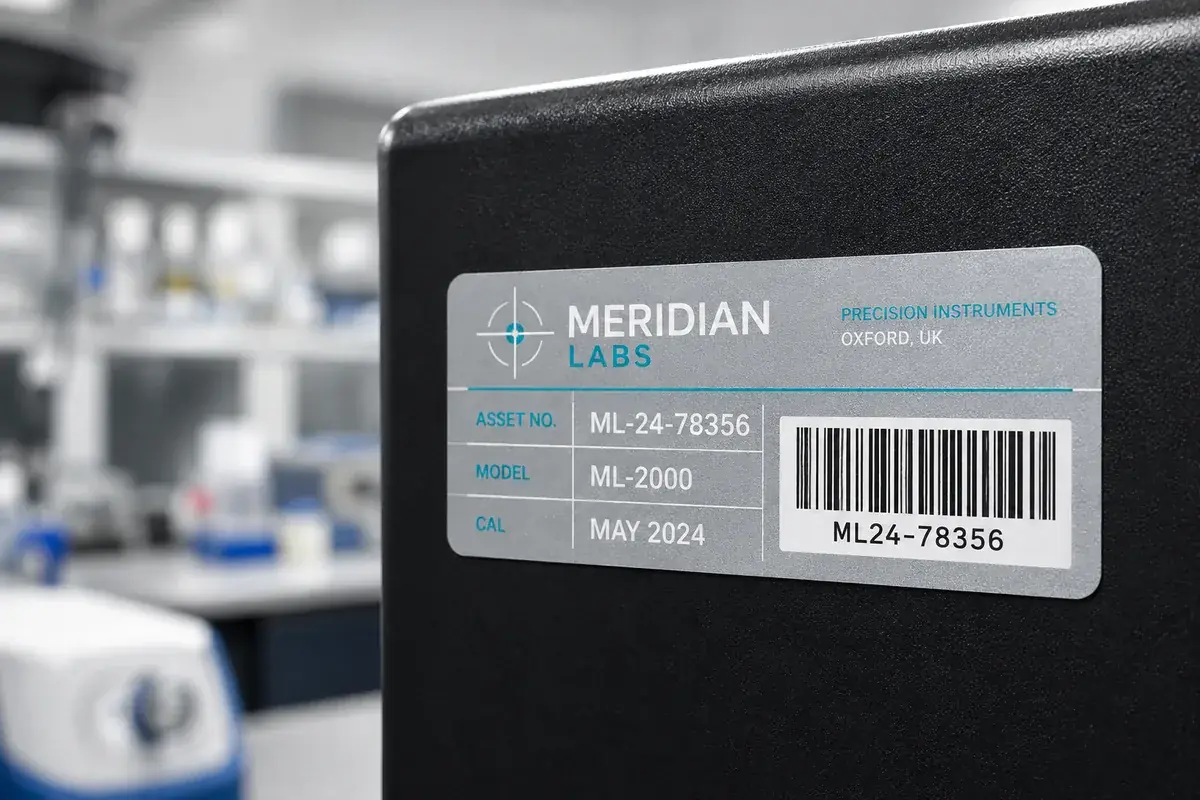
White polyester
The everyday inventory label: laptops, tools, furniture, lab instruments. Wipe-proof, tear-proof, laminated, reinforced adhesive.
from £147 / 100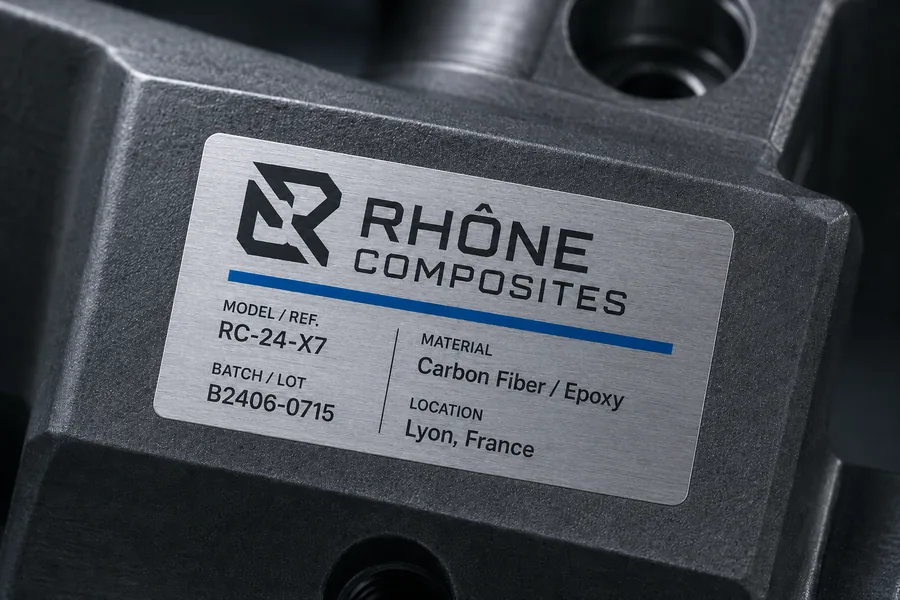
Aluminium polyester
When the label must read as part of the machine: brushed or matt metal, serial number, CE marking, service data.
from £179 / 100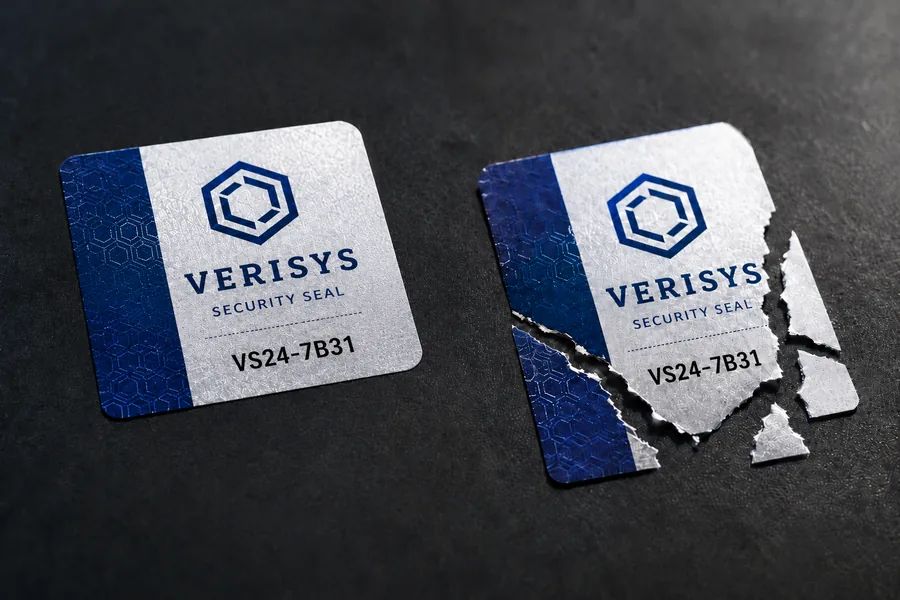
Destructible property film
Property marking and hire fleets: the label breaks into fragments if anyone lifts it, so it can never be transferred to another item.
from £137 / 100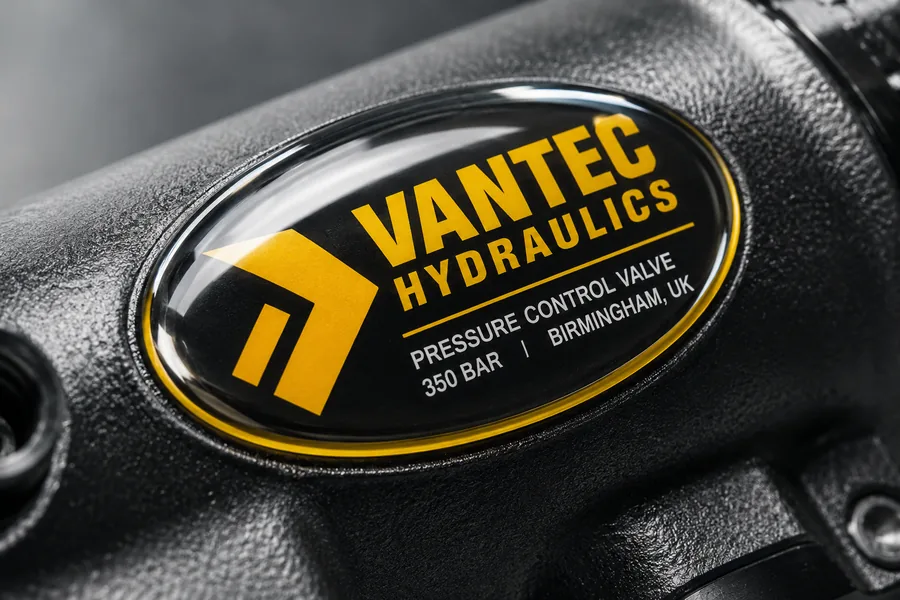
Resin domed badges
A raised, glass-like resin dome over the print. Used where the identity plate is also the brand: control units, machines, dealer badges.
from £280 / 100Production runs 4 to 10 working days once the proof is approved, then delivery across Europe and the UK.
Choosing
Start from what the asset goes through
| Asset | Material | Adhesive | Typical data |
|---|---|---|---|
| IT equipment, screens, laptops | White polyester | Permanent | Asset number + barcode |
| Hand tools, small equipment | Polyester or destructible | Reinforced | Number + owner name |
| Machines & production lines | Aluminium polyester | Reinforced | Serial, CE marking, voltage |
| Lab instruments, calibrated tools | White polyester | Permanent | Calibration date + QR to the record |
| Hire fleet, loaned equipment | Destructible film | Permanent | Number + return instructions |
| Outdoor plant, site equipment | Polyester, laminated | Reinforced | Number + QR to the manual |
Two demands at once — outdoors and removable, or metal look and tamper-evident — usually leave one sensible answer. Describe the fleet and a specialist replies within 2 working hours.
The number is the point
Print the register onto the asset
An inventory only works when the identifier on the object matches the line in the system. Labels numbered by hand, or a roll of identical stickers with a marker pen number, break that match within a quarter: numbers get repeated, digits get misread, and nobody trusts the count at audit time.
We print the sequence — or your existing asset references — label by label, with a barcode or a unique QR code beside it. Send the export your system already produces; the layout, the check digits and the scannable sizing are ours.
- Material
- White polyester
- Size
- 50 × 25 mm
- Finish
- Matt lamination
- Adhesive
- Reinforced permanent
- Variable data
- Asset no. + Code 128
- Data supplied
- CSV export from the register
- Quantity
- 1 000 labels
An example of a real order. Quantities are not capped — we print from a hundred pieces to several million.
Practical notes
Three details that decide whether the label lasts
Where it goes
A flat, clean panel away from vents, handles and edges. A label on a corner or across a seam is lifted by every hand that picks the item up.
Room to scan
A barcode needs clear space either side to be read. On a small label, a QR code holds the same number in less room and scans from any angle.
One spare set
Order a small overrun. Assets get replaced, labels get damaged in service, and a second run of thirty labels costs almost as much as the first hundred.
FAQ
Asset labels — what managers ask us
How do I get a unique number on every asset label?
Send a starting number and a quantity, or the list of asset references your inventory system already holds. Each label is printed with its own number and, if you want it, its own barcode or QR code — inside the same run, from 100 labels. You do not have to prepare anything beyond the export you already have.
Barcode or QR code on an asset label?
A barcode if your team scans with a dedicated gun and the number is all that matters. A QR code if you want a phone to be enough, or if the code should open a record — maintenance history, manual, contact. QR also holds more data in less space, which counts on a small label.
Will the label survive cleaning, alcohol and workshop use?
A printed polyester under a protective lamination handles wiping, alcohol, oils and daily handling; that is the standard specification for equipment identification. Bare paper does not survive a single cleaning cycle, and thermal paper printed in-house fades where it is touched.
Can an asset label be removed?
That is a choice you make at the order. A reinforced permanent adhesive is meant to stay for the life of the equipment. A destructible film goes further: it breaks apart if anyone tries to lift it, so a property label cannot be moved to another item. If assets change hands and labels must come off cleanly, ask for a removable adhesive instead.
What size should an asset label be?
For a barcode plus a readable number, 50 × 25 mm is a comfortable minimum; below that the barcode gets tight and scanning slows down. Our smallest standard die on polyester is 35 × 30 mm, and industrial films go down to 15 × 20 mm for a QR code alone. Rating plates carrying a full set of technical data usually sit around 75 × 50 mm.
For cables and loops, wrap-around cable labels close on themselves like a flag.
Councils, schools, hospitals and universities label their inventory under their own procurement rules — see labels for the public sector.
Free quote
Describe your labels — a specialist answers within 2 working hours
Material, size, quantity, container, constraints: a few lines are enough. You get a firm price, or our questions, by e-mail.
Every asset numbered, every number scannable.
Polyester, aluminium and destructible films — from 100 labels.