
Industrial & outdoor labels
Built for the environment, not for the shelf
The short answer: outdoors and on the shop floor, choose a film — polyester for flat rigid surfaces, polyethylene for rough or curved ones, aluminium polyester for rating plates, polyimide when the part goes above +80 °C. Add a reinforced adhesive and a protective lamination, and the label outlives the paperwork. From 100 labels.
Materials
Five industrial materials, and the job each one takes
White polyester
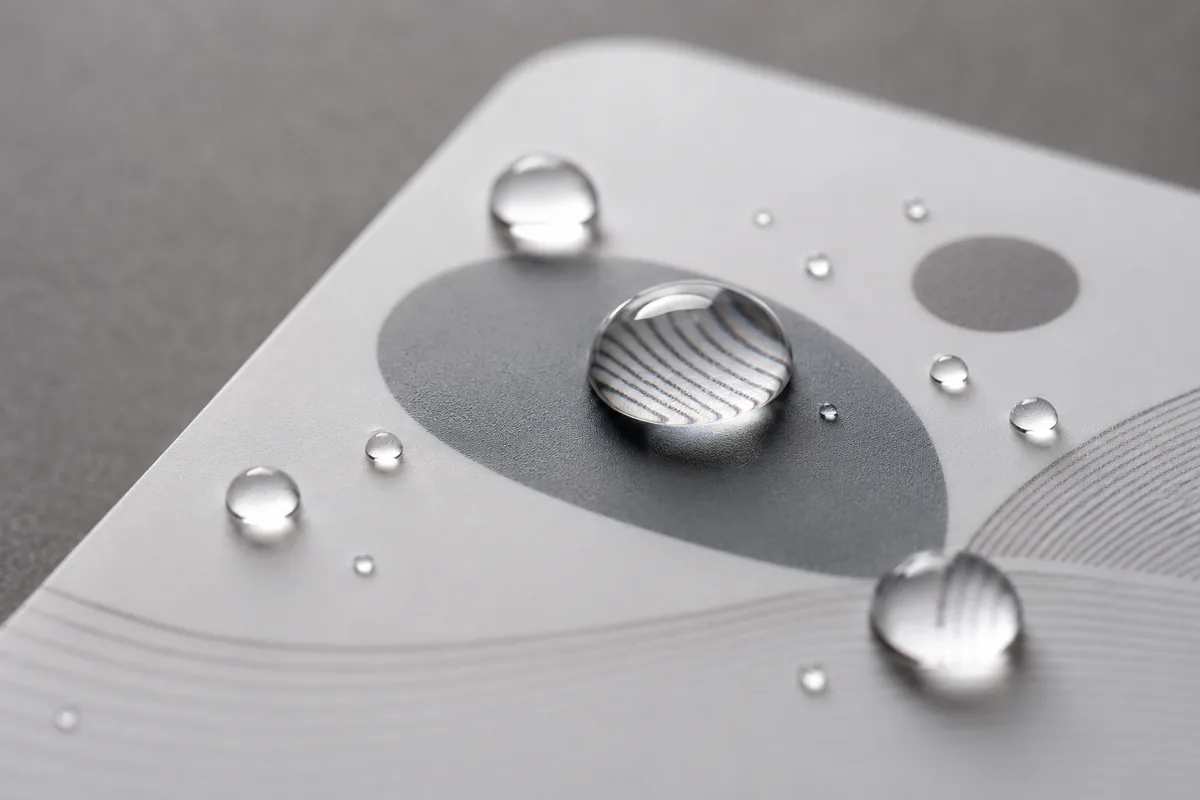
The default for anything flat, rigid and exposed: tear-proof, waterproof, stable under UV. Reinforced adhesive as standard.
from £147 / 100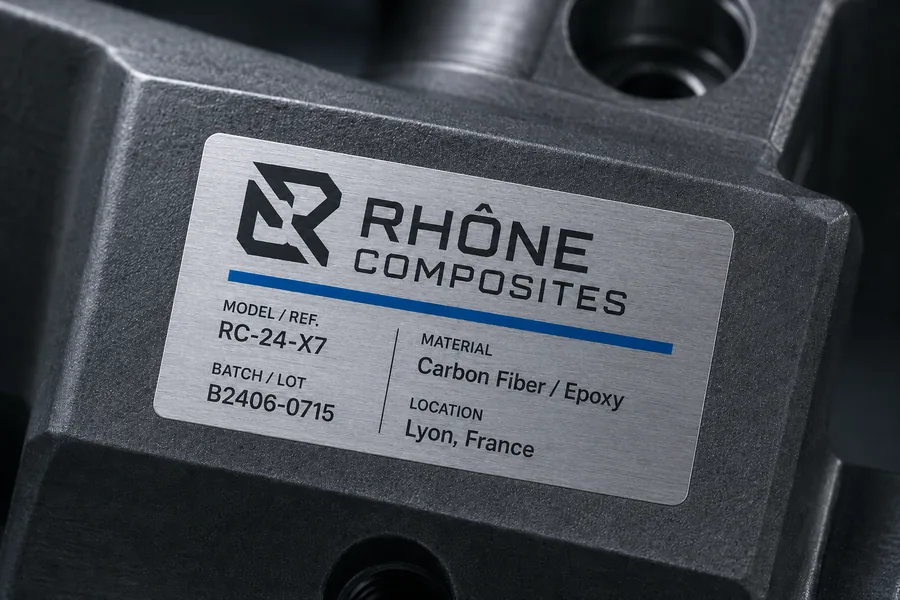
Aluminium polyester
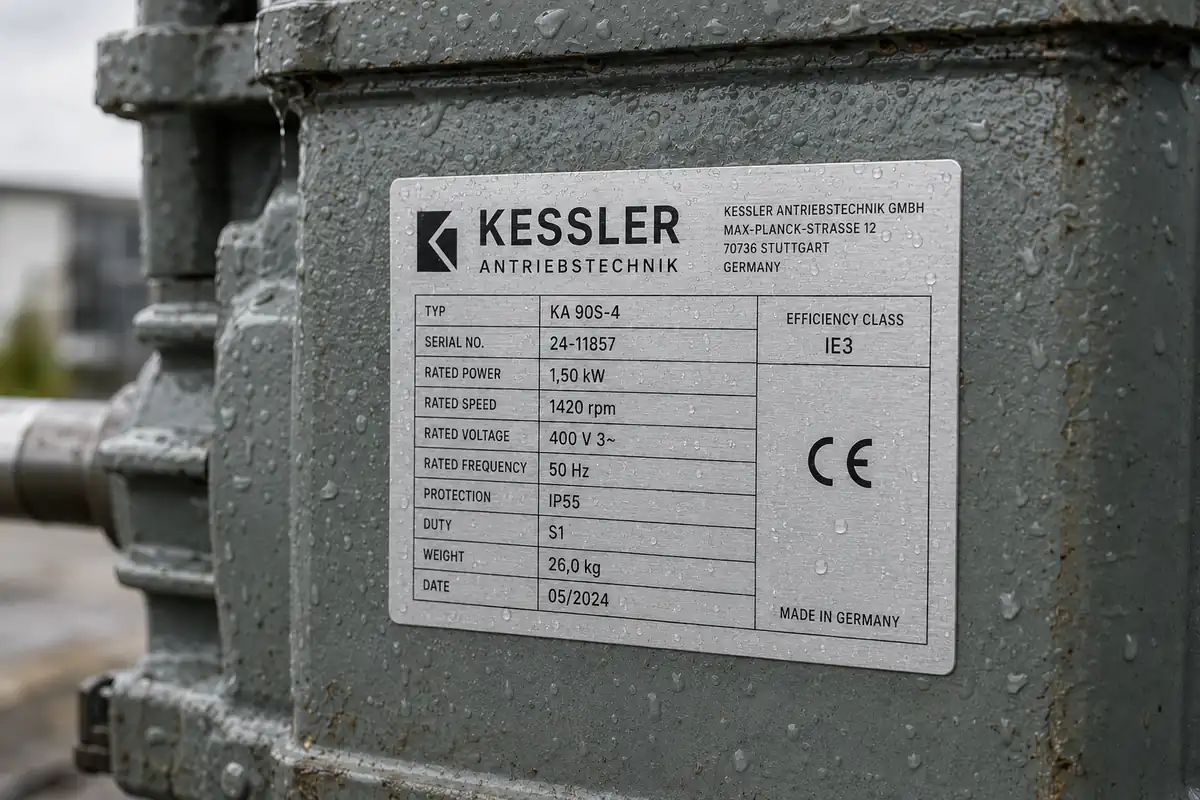
Brushed or matt metal look for rating plates and nameplates — serial number, CE marking, voltage, date of manufacture.
from £179 / 100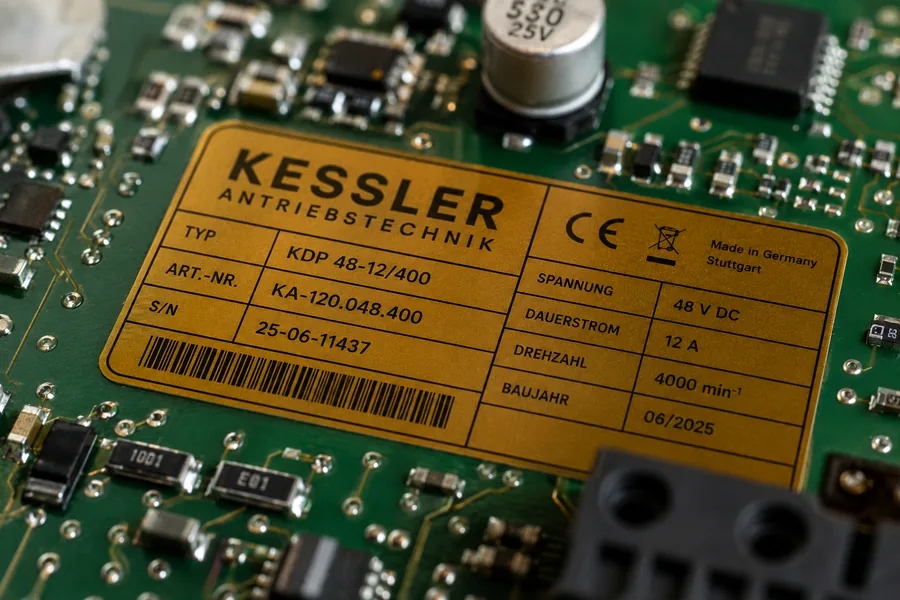
Polyimide, high temperature
Circuit boards through reflow, engine parts, heating elements. Where every other film shrinks, chars or lets go.
from £162 / 100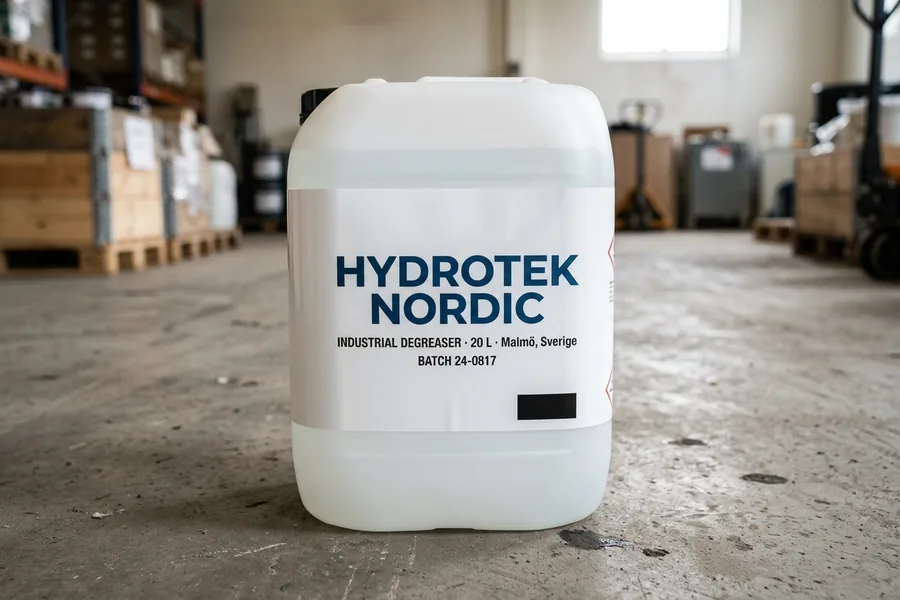
White polyethylene
Soft and flexible: follows drums, jerricans, cable ducts and powder-coated housings that a rigid film would peel off.
from £169 / 100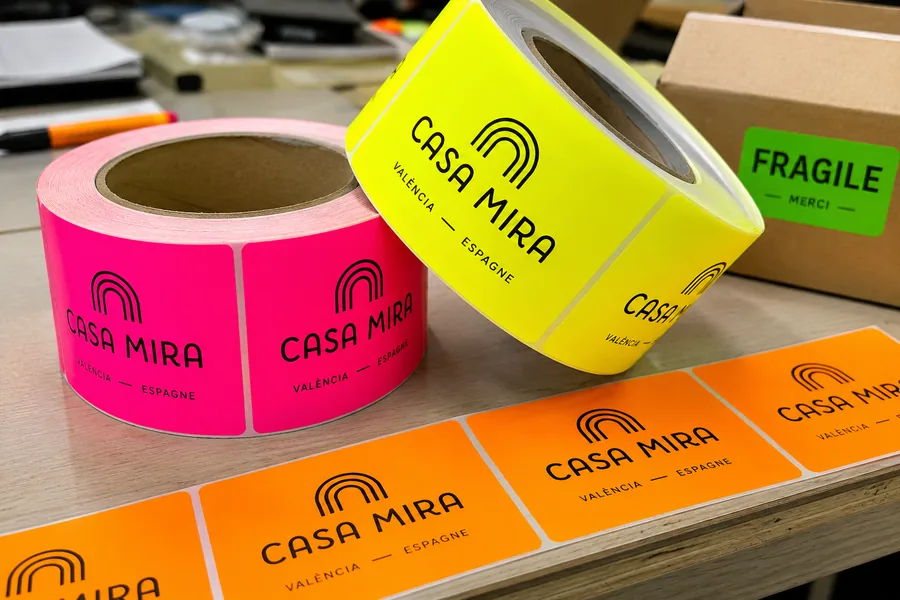
Fluorescent stock
Inspection dates, quarantine, handling instructions — read across a warehouse aisle rather than at arm's length.
from £121 / 100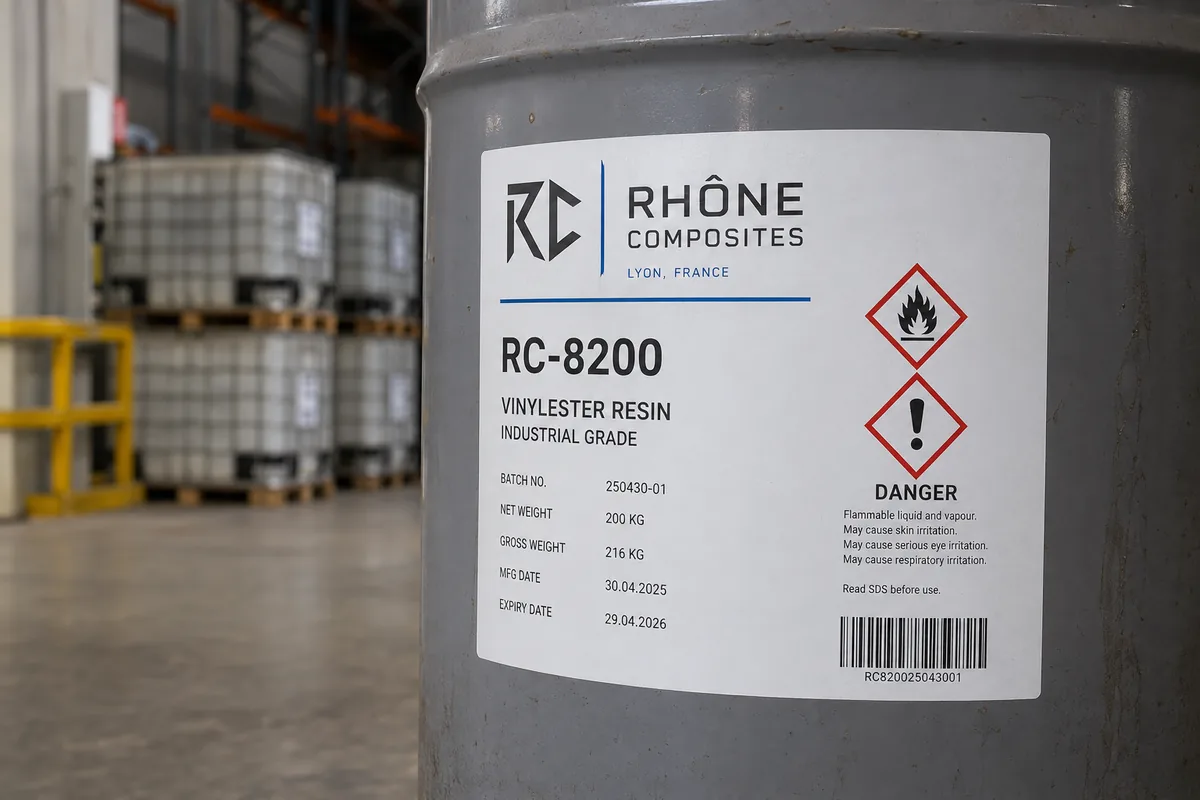
Chemical & GHS
Solvent-proof films, hazard pictograms and drum labelling have their own rules — and their own page.
see the rangeProduction runs 4 to 10 working days once the proof is approved, then delivery across Europe and the UK.
Choosing
Start from what attacks the label
| Constraint | Material | Adhesive | Finish |
|---|---|---|---|
| Outdoor exposure, several years | White polyester | Reinforced | Protective lamination, mandatory |
| Abrasion, handling, cleaning | Polyester or PP film | Permanent | Matt lamination resists scuffing |
| Rough or curved surfaces | White polyethylene | Reinforced high-tack | Gloss varnish |
| Heat above +80 °C | Polyimide film | High-temperature permanent | Uncoated, print heat-cured |
| Machine identity plate | Aluminium polyester | Reinforced | Brushed or matt metal |
| Must be seen from a distance | Fluorescent paper | Permanent | Varnish, indoor use |
| Removed at the end of the job | Coated paper or PP | Removable | Leaves no residue |
Two constraints at once — heat and solvents, outdoors and removable — usually narrow the answer to one material. Describe the case in a custom request and a specialist answers within 2 working hours.
What actually fails
The surface decides more than the film
Most industrial label failures are not a material that gave up — they are a bond that never happened. A powder-coated housing, a moulded plastic case, a dusty drum or a cold metal frame all offer far less real contact than they look like they do, and a standard adhesive only grips the high points.
Three questions settle it: is the surface rough, curved or textured — is it clean and dry when the label goes on — and how warm is it at that moment? Answer those and the choice narrows to a flexible face material with a reinforced adhesive, applied above +10 °C, pressed down firmly rather than laid on.
- Material
- Brushed aluminium polyester
- Size
- 75 × 50 mm
- One colour, heat-cured
- Adhesive
- Reinforced permanent
- Service range
- −40 °C to +150 °C
- Variable data
- Serial number + Code 128
- Quantity
- 500 labels
An example of a real order. Quantities are not capped — we print from a hundred pieces to several million.
Identity & traceability
Every unit leaves with its own number
Serial numbers & barcodes
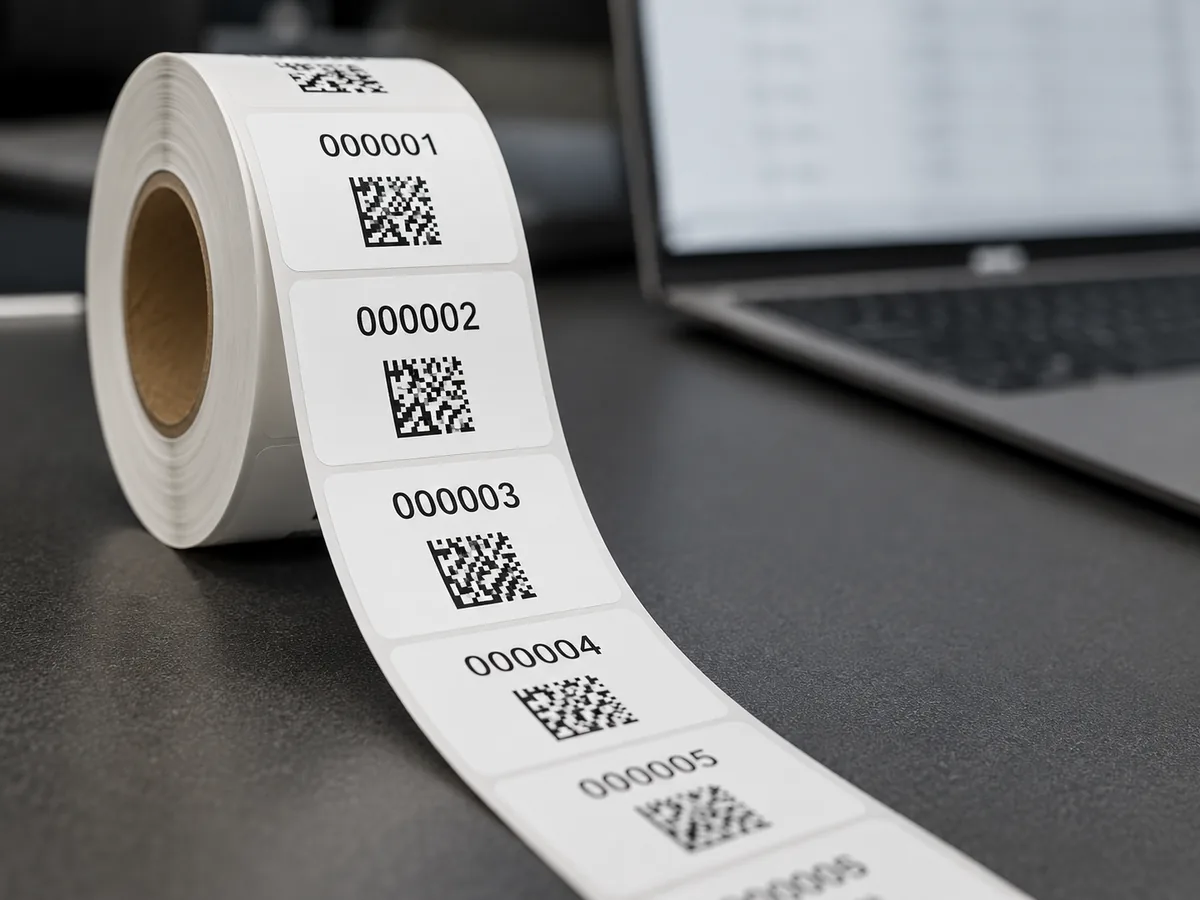
Sequential numbering, Code 128 and GS1 barcodes, unique QR codes — printed in the run, from 100 labels. Send a starting number or a data file; we do the rest.
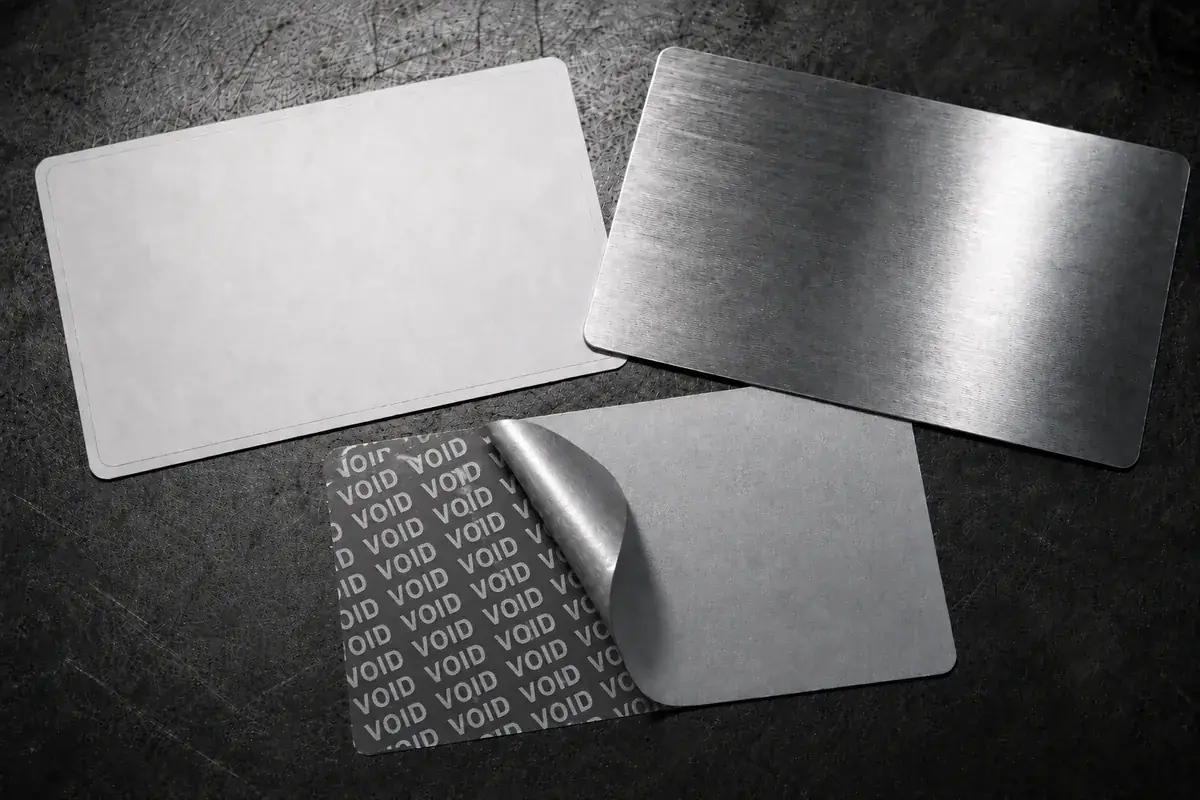
When it must not come off intact
Warranty seals, property marking and calibration stickers use destructible or VOID films: removing them destroys them, and that is the point.
FAQ
Industrial labels — what engineers ask us
How long does an industrial label last outdoors?
A printed polyester or polypropylene film under a protective lamination is built for several years of outdoor exposure in European conditions; a coated paper label is finished in one wet season. What ages first is rarely the film — it is the ink and the varnish under UV, which is why outdoor work is laminated as standard and why dark solid colours hold longer than pale tints.
Which label sticks to a rough or textured surface?
A flexible film with a high-tack adhesive. A rigid face material bridges the peaks of a textured surface and only touches a fraction of it, so it peels at the corners; a soft polyethylene follows the texture and a reinforced adhesive flows into it. For powder-coated metal, moulded plastic housings and drum shoulders, that combination is what holds.
What temperature can your labels take?
Standard films work to about +80 °C. Above that, a white polyimide film is rated to +250 °C — the material used on circuit boards through reflow, on engine and heater components. At the other end of the range, we carry freezer stock to −40 °C and a cryogenic film to −196 °C.
Do you print rating plates and equipment nameplates?
Yes — brushed or matt aluminium polyester, printed in one colour or in full colour, with a reinforced adhesive. It is the classic machine nameplate: serial number, CE marking, voltage and date of manufacture, printed label by label so every unit carries its own data.
Can industrial labels carry serial numbers and barcodes?
Yes, from 100 labels. Sequential serial numbers, Code 128 and GS1 barcodes and unique QR codes are printed in the run itself, so each machine, tool or asset leaves with its own identifier and its own scannable code.
When one colour is enough, industrial one-colour labels cut the cost of rating plates and warnings.
Free quote
Describe your labels — a specialist answers within 2 working hours
Material, size, quantity, container, constraints: a few lines are enough. You get a firm price, or our questions, by e-mail.
Specify the environment. We specify the label.
Films, high-tack adhesives, +250 °C to −196 °C. From 100 labels.