
Eco-friendly labels
Made of something else
The short answer: this range replaces the material rather than the marketing — recycled fibre, sugarcane and grass residues, cellulose film, stone. A biodegradable adhesive is available and should be asked for explicitly, because a compostable paper with a conventional glue is not a compostable label. From €170 per 100.
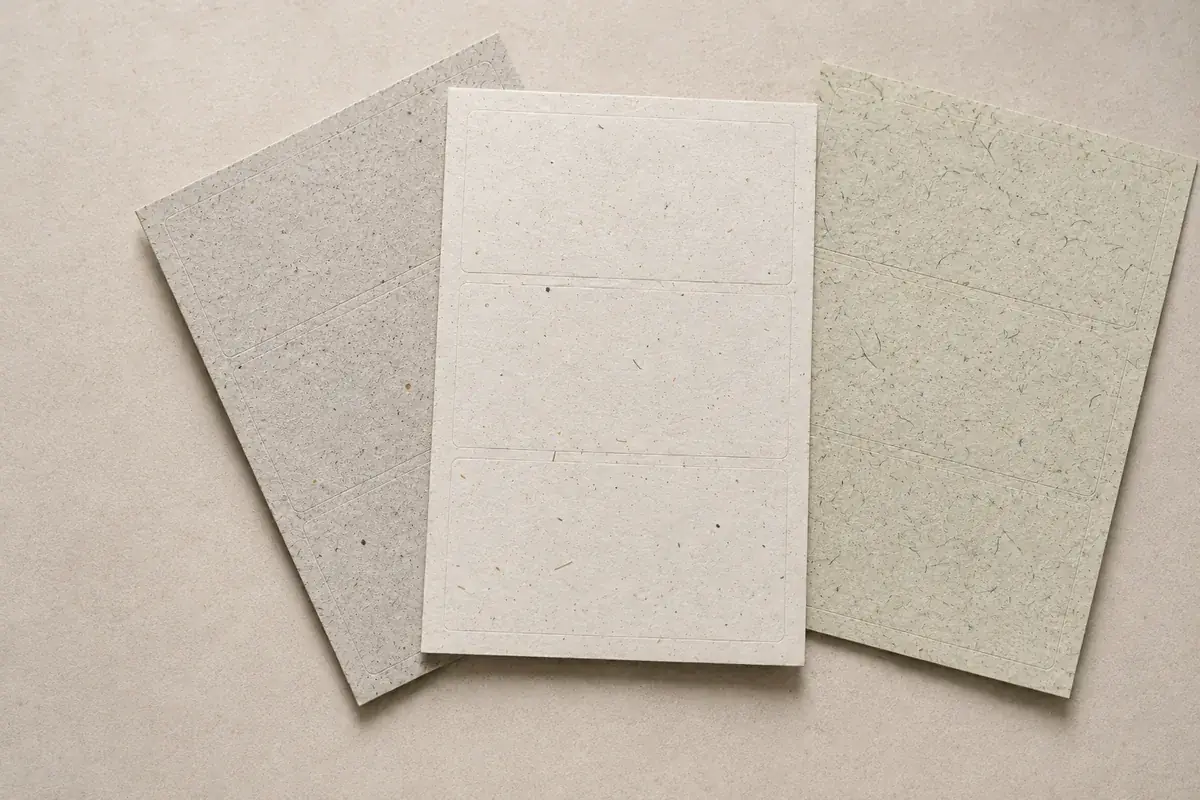
The range
Six materials, and what each is actually made of
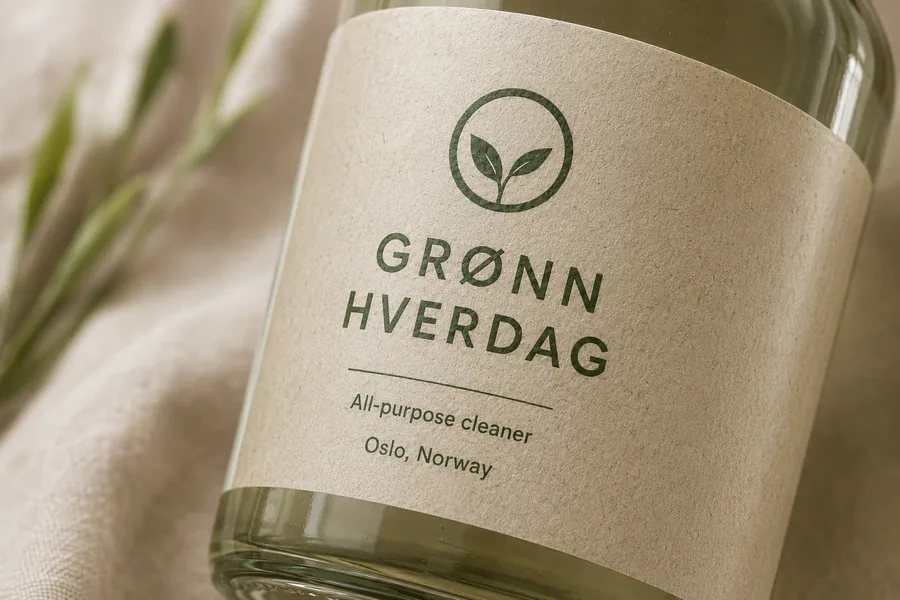
Sugarcane fibre
Made from bagasse, the fibre left after cane is pressed for sugar. Warm, slightly irregular, and the least expensive way into this range.
from €170 / 100
Bio-based polyethylene
A film with the behaviour of plastic — waterproof, flexible — but produced from plant-derived material. White or transparent.
from €208 / 100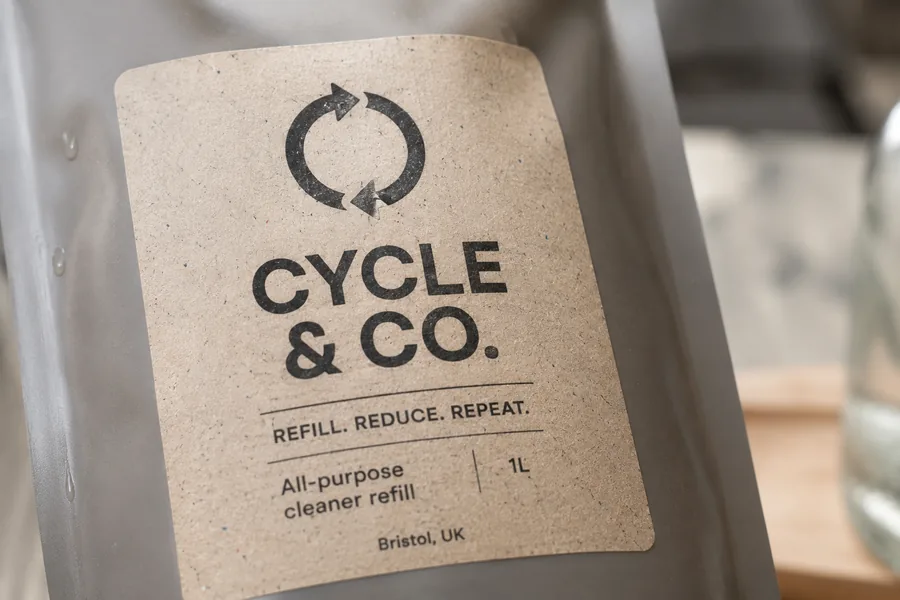
Recycled white
Post-consumer fibre, visibly less bright than a coated white. The honest choice when the claim you want to make is simply « we did not use new material ».
from €212 / 100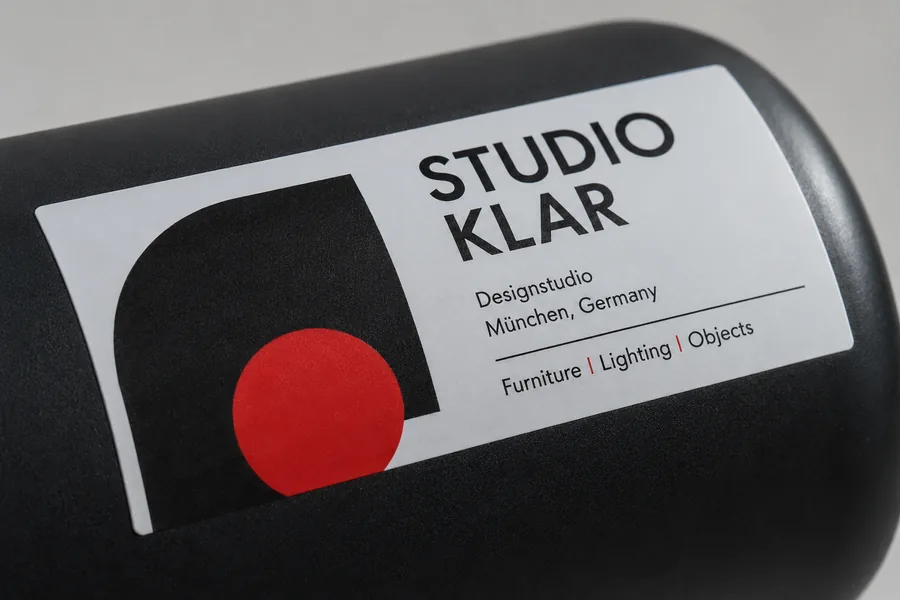
Stone paper
Mineral powder rather than wood pulp: no trees, no water in the making, and a smooth surface that resists damp far better than paper.
from €212 / 100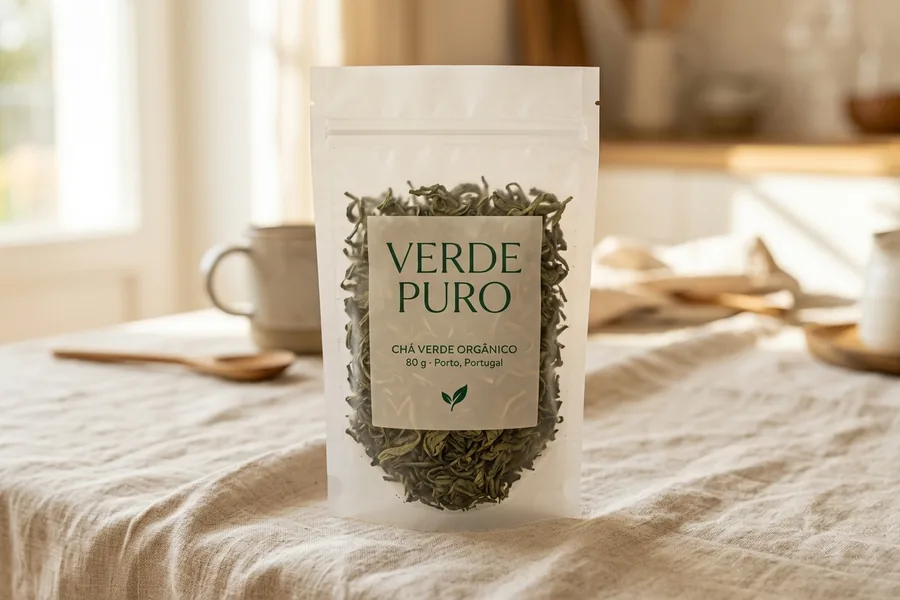
Cellulose film
A transparent or white film made from wood pulp instead of oil — the closest this range gets to a plastic look without the plastic.
from €242 / 100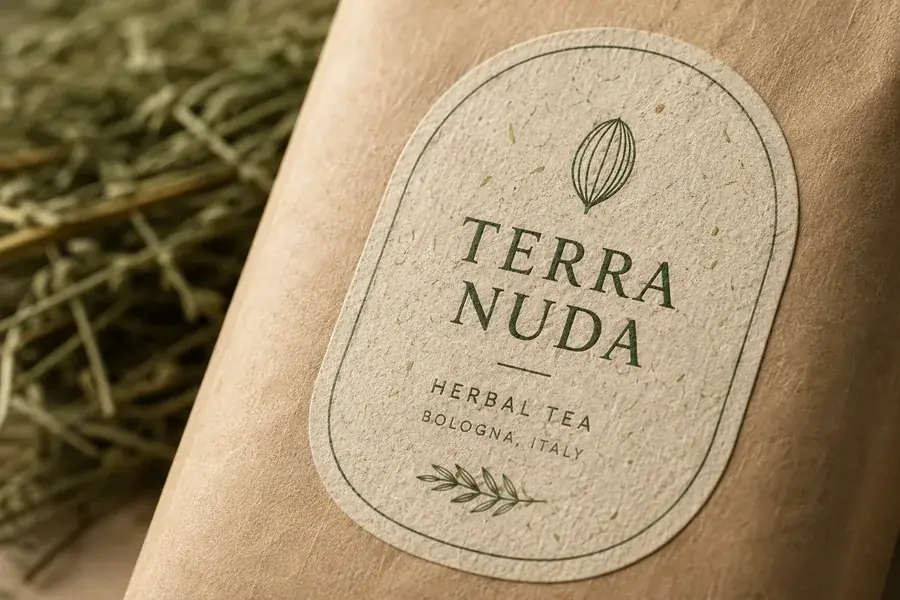
Grass paper
Sun-dried grass fibre mixed with pulp, with visible flecks. The most textured and the most talked-about of the range.
from €243 / 100Also available: a biodegradable coated white for brands that want a conventional look with a different composition. 20 sizes up to 100 × 105 mm, any die-cut shape, 100 to 10 000 online and more on quotation.
Specification
What you choose when you order
| Choice | Options | What it changes |
|---|---|---|
| Printing | Full colour | Warmer, softer rendering than coated white |
| Protection | None · gloss varnish · gloss lamination | A lamination protects the print but changes the composition |
| Adhesive | Permanent · biodegradable permanent | Ask for it explicitly — it is not automatic |
| Shape | Any die-cut shape | A smaller label is the simplest saving of all |
| Variable data | Not available on this range | Numbering runs on coated and synthetic stocks |
| Sizes | 20 formats, up to 100 × 105 mm | 100 to 10 000 online, more on quotation |
Production runs 4 to 10 working days once the proof is approved, then delivery across Europe and the UK.
Saying it honestly
We describe what it is made of, not what it is worth
Every material on this page replaces something: new fibre, wood, oil. None of them makes a product sustainable on its own, and European rules on environmental claims are getting stricter about exactly that gap between a material and a message.
So we tell you the composition, the adhesive and the limits, and we leave the claim to you and to your own market. If you want, send us the wording you intend to print — we will tell you when it describes something the material does not actually do.
- Material
- Sugarcane fibre
- Size
- 75 × 50 mm
- Printing
- Two flat colours
- Protection
- None — texture kept
- Adhesive
- Biodegradable permanent
- Quantity
- 500 per reference
- Production
- 4 to 10 working days
An example of a real order. Quantities are not capped — we print from a hundred pieces to several million.
Price by quantity
What a run of recycled paper costs
Full colour, 55 × 70 mm, unvarnished — die, setup and printing included.
| Quantity | Run price | Per label |
|---|---|---|
| 100 | €227 | €2.27 |
| 500 | €239 | €0.48 |
| 1 000 | €261 | €0.26 |
| 2 000 | €298 | €0.15 |
| 3 000 | €333 | €0.11 |
Excluding VAT and delivery. Sugarcane fibre runs about 10 % below these figures, grass paper about 10 % above — the quote tool gives the exact price for your material and size. Above 10 000 labels, quantities are quoted at volume rates — up to millions.
FAQ
Eco materials — what brands ask us
Which of these materials is really the most sustainable?
There is no single winner, and anyone who names one is selling something. Recycled fibre avoids new material, agricultural residues like sugarcane and grass use a by-product instead of wood, cellulose films are made from renewable pulp, stone paper uses no water or trees but is not paper at all. The choice depends on what you can claim honestly and on how your packaging is actually disposed of where you sell it.
Is the adhesive biodegradable too?
A biodegradable adhesive is available on this range, and it matters: a compostable face material carrying a conventional adhesive is not a compostable label. Ask for it explicitly at the order — it is a separate choice from the paper.
Can a label be recycled with the packaging it is stuck to?
It depends on the packaging and on the local system, not on the label alone. A paper label on cardboard usually goes through paper recycling without trouble; a plastic film on glass or a large label on PET can interfere with sorting. If recyclability is the point of the exercise, tell us the packaging and the market and we look at the combination rather than the label on its own.
Do these materials print as well as coated paper?
Not identically, and that is worth knowing before the design. Recycled and agricultural-fibre stocks are slightly warmer and more absorbent, so photographs look softer and solid colours less brilliant than on coated white. Type, line work and one or two flat colours look excellent. Design to the material and it is an advantage rather than a compromise.
What sorting information must my packaging carry?
Sorting information is not harmonised across Europe yet: several countries impose their own marking today — France being the strictest, with the Triman and its Info-tri — and the European PPWR will replace them with a single EU marking later this decade. The label is usually where that signage goes. We print whatever your artwork contains, but the obligation and the exact wording remain yours to confirm for each market. See our guide.
In this range
Every product under Eco-friendly
Change the material, not the message.
Recycled, sugarcane, grass, stone and cellulose — from 100 labels.