
Stone Paper Labels · Eco-friendly
Paper with no wood, no water and no fibre
The short answer: stone paper is mineral powder bound into a sheet. No trees, no water in the making, no fibre — and, as a side effect, a smooth surface that resists damp far better than any real paper in this range. From €212 per 100. It is also the eco material that behaves least like paper, which cuts both ways.
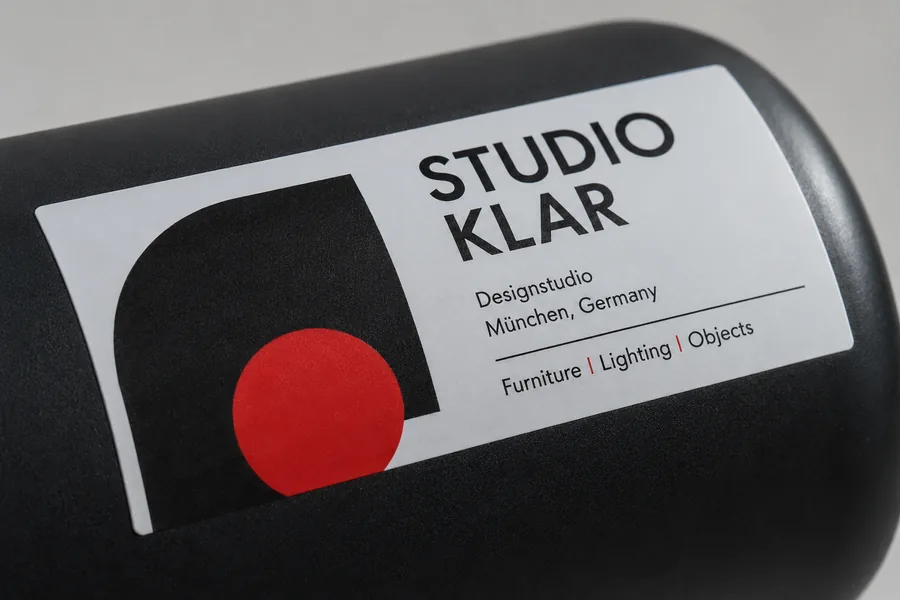
Any shape within this size — rectangle, round, oval or custom die-cut.
VAT invoice · card or bank transfer · proof before production · ±5 % quantity tolerance
- Printing
- 1 option
- Protection
- 1 option
- Adhesives
- 1
- Sizes
- 16 formats
- Smallest
- 35 × 30 mm
- Largest
- 100 × 105 mm
- Quantities
- 100 → 10 000, more quoted
- Variable data
- quoted on request
Printed from €212 per 100, unprinted on rolls from €66. Production 4 to 10 working days after proof approval.
What it actually is
Smooth, slightly plastic, and surprisingly tough
Because there is no fibre, there is no grain, no absorbency and nothing for water to swell. Colours sit brighter and sharper than on any other material in the eco range — closer to a coated paper than to recycled or grass — and a splash wipes off instead of soaking in.
The trade-off is the hand feel. Stone paper is smooth and faintly synthetic under the thumb; it does not read « natural » the way sugarcane or grass paper does. So it is the right eco choice when the constraint is technical — a damp bathroom, a chilled shelf, a label that gets handled — and the wrong one when the point of the packaging is that it looks made of plants.
- Made of
- mineral powder
- Trees used
- none
- Water in making
- none
- Feel
- smooth, slightly synthetic
- Damp
- resists it
- Printing
- full colour, bright
- From
- €212 / 100
Being honest about the end of life
Tree-free is not the same as compostable
Stone paper avoids wood and water at the making. What it does not do is disappear afterwards: it is not a compostable material, and it does not belong in a paper recycling stream, where the mineral content is a contaminant. If your claim is about production, it is a strong material. If your claim is about what happens after the bin, the honest answers in this range are the cellulose films with a biodegradable adhesive.
We describe what each material is made of and leave the claim to you — European rules on environmental wording are tightening, and « eco » on its own is now a liability rather than an argument.
Price by quantity
What a run actually costs
Up to 55 × 70 mm, full colour, unprotected — die, setup and printing included.
| Quantity | Run price | Per label |
|---|---|---|
| 100 | €227 | €2.27 |
| 200 | €231 | €1.16 |
| 300 | €236 | €0.79 |
| 500 | €238 | €0.48 |
| 1 000 | €259 | €0.26 |
| 1 500 | €273 | €0.18 |
| 2 000 | €294 | €0.15 |
| 3 000 | €327 | €0.11 |
| 5 000 | €409 | €0.082 |
| 10 000 | €614 | €0.061 |
Excluding VAT and delivery. Other sizes, finishes and quantities are priced in the configurator above.
FAQ
Stone paper — what brands ask us
What is stone paper made from?
Mineral powder — largely calcium carbonate — bound into a flexible sheet. There is no wood pulp and no water used in the forming process, which is where the environmental argument sits.
Is it waterproof?
It resists damp far better than any fibre paper here: a splash wipes off, condensation does not swell it, and the print stays put. It is not a certified waterproof film, though. For a bottle that lives in ice or a container that gets washed, use a synthetic film.
Is it recyclable or compostable?
Neither, in the ordinary sense. It is not compostable, and it should not go into a paper recycling stream because the mineral content contaminates it. Its argument is about how it is produced, not about how it is disposed of — and that distinction is worth being precise about on a pack.
How does it print?
Very well: no absorbency means sharper text and brighter colours than on recycled or grass paper, closer to what you would get on a coated stock. It is the eco material that asks the least of your design.
Does it feel like paper?
Not entirely. It is smooth and slightly synthetic under the thumb, with no grain. If the tactile « natural » impression is the point of your packaging, sugarcane or grass paper do that job and stone paper does not.
No trees, no water, and it survives the bathroom.
Mineral stone paper, from €212 per 100.