
Food-safe labels
Certified where it matters, practical everywhere else
The short answer: if the label touches the food, you need a certified direct-contact material with a migration-tested adhesive and its declaration of compliance. If it only touches the packaging, a food-grade adhesive is enough — and the real question becomes cold, grease or humidity. From 100 labels per design.
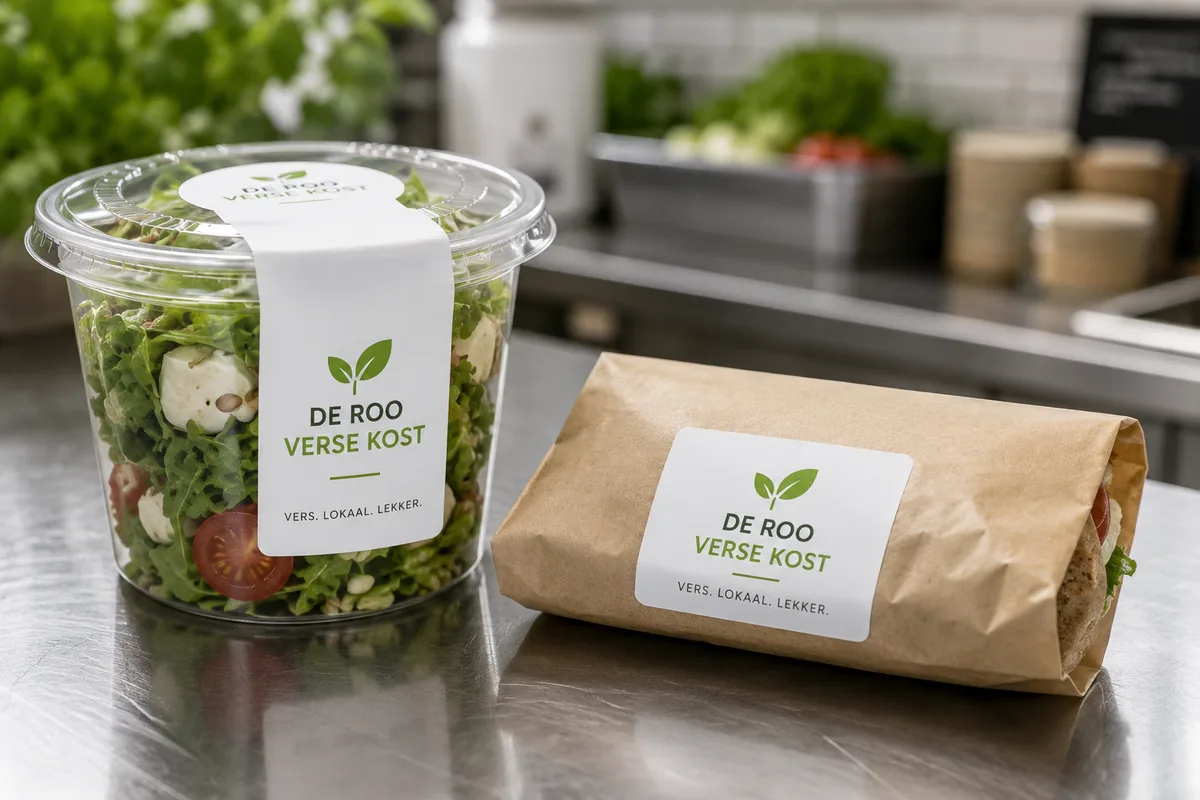
First question
Does your label touch the food?
Yes — direct contact
A seal closing a paper-wrapped cheese, a label on an unwrapped bakery item, a sticker on the inner face of a lid. Needs a certified material, a migration-tested adhesive and a declaration of compliance.
from £221 / 100No — packaging only
A label on a closed jar, a sealed tray, a carton or a film pack. A standard food-grade adhesive is sufficient — which is what every label we ship already carries. Choose your material for cold, grease or humidity instead.
from £116 / 100If you are not sure which case applies to your product, describe it in a custom request — a specialist answers within 2 working hours.
Materials
The four constraints of a food label
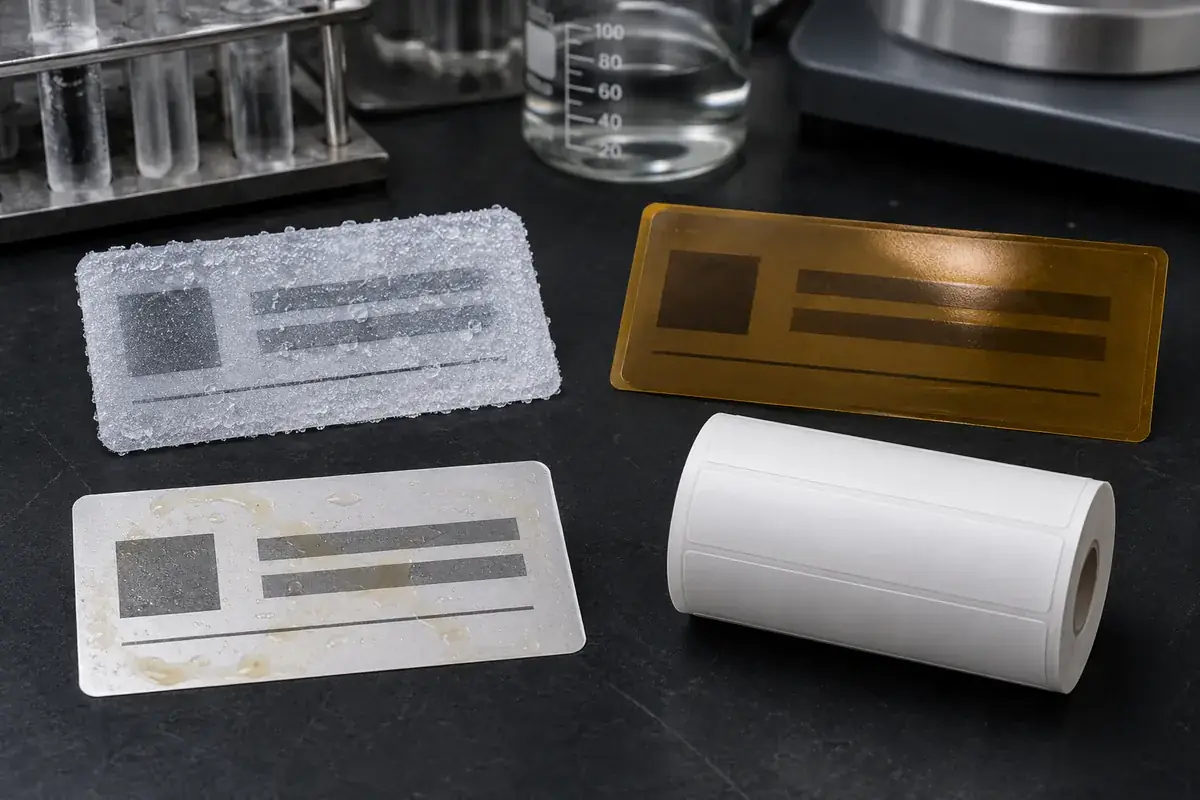
Direct contact
Certified polyester or coated paper, migration-tested adhesive, documentation supplied.
from £221 / 100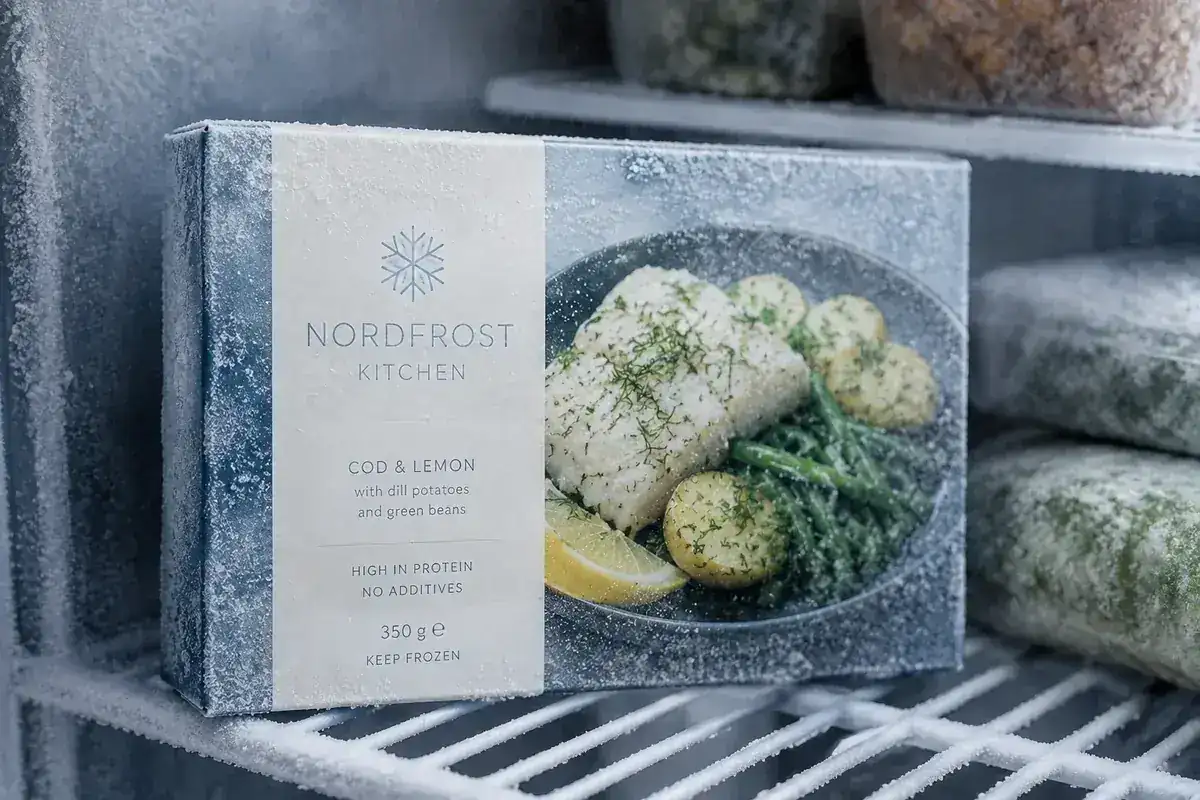
Freezer & chilled
Adhesive that bonds on a cold surface and holds to −40 °C. The single most common failure we are asked to fix.
from £149 / 100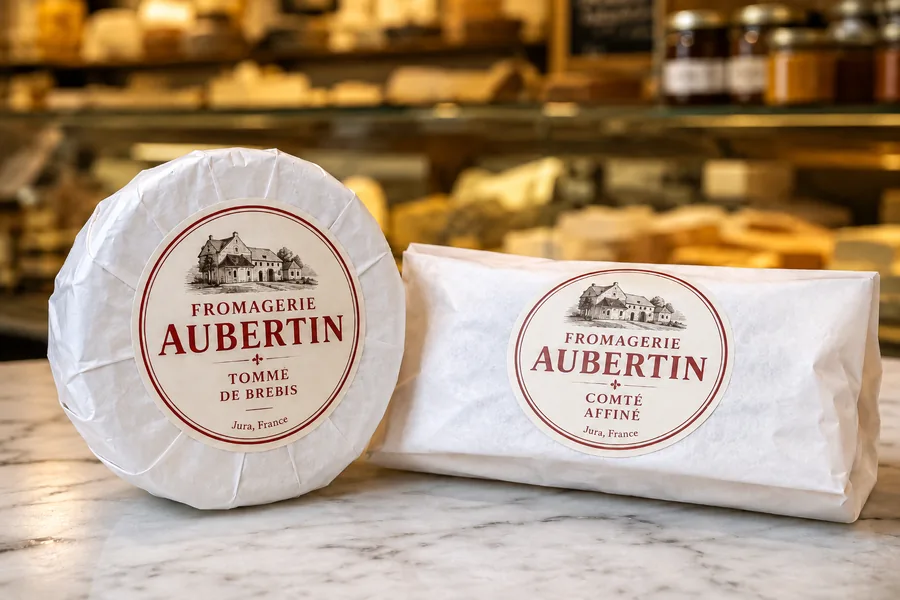
Greaseproof
Cheese, charcuterie, bakery. Keeps the print clean where a standard paper turns translucent within a day.
from £169 / 100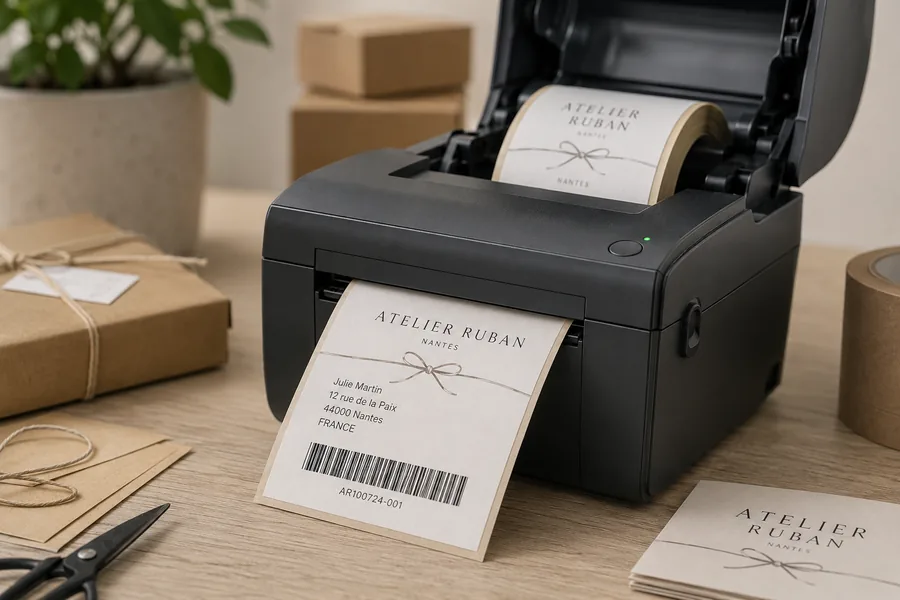
You print it yourself
Two ways: blank rolls for a printer that does everything, or your design pre-printed with a coated panel left free for dates and batch numbers.
from £155 / 100Regulation
What EU rules expect on a food label
| Mention | Applies to | Practical consequence |
|---|---|---|
| Product name & ingredients | All prepacked food | Ingredients in descending order of weight |
| Allergens | All prepacked food | Emphasised in the list — bold, capitals or a different colour |
| Nutrition declaration | Most prepacked food | A table per 100 g or 100 ml; needs real space on the label |
| Net quantity | All prepacked food | Minimum type height is set by the pack size |
| Date & lot number | All prepacked food | Best printed as variable data, not written by hand |
| Business name & address | All prepacked food | The operator responsible for the information |
This is a reminder of what generally has to fit, not legal advice — our food labelling guide covers it properly, and your national authority has the final word.
Dates & lots
Stop writing dates by hand
Best-before dates, lot numbers and barcodes can be printed label by label in the same run. If you prefer to print them as you pack, take blank rolls or ask us to pre-print your design and leave a coated panel free. Either way, a recall trail that is legible beats one written in marker pen at the end of a shift.
- Material
- Certified polyester
- Size
- 55 × 70 mm
- Finish
- Gloss lamination
- Variable data
- Lot + use-by date
- Quantity
- 2 000 labels
- Adhesive
- Migration-tested
An example of a real order. Quantities are not capped — we print from a hundred pieces to several million.
FAQ
Food labels — what producers ask us
What counts as direct food contact?
A label is in direct contact when it touches the food itself rather than the outside of a sealed pack — a sticker closing a paper-wrapped cheese, a label on an unwrapped bakery item, a seal on the inner face of a lid. A label on the outside of a closed glass jar or a sealed film pack is not in direct contact, and a standard food-grade adhesive is enough.
Which material do you use for direct contact?
A certified white polyester or a certified coated paper, both with a migration-tested adhesive, supplied with the supporting documentation.
Do you supply the compliance documentation?
Yes. Certified direct-contact references ship with the manufacturer declaration of compliance, which is what a food safety audit will ask you for. Request it with your order and we send it with the delivery note.
Which label works on frozen or chilled products?
A freezer-grade adhesive, which stays tacky when applied at low temperature and holds down to −40 °C. A standard permanent adhesive applied to an already-cold surface will not bond and the label lifts within hours. For laboratory use we also carry a −196 °C range.
What about greasy foods like cheese and charcuterie?
Use a greaseproof material. Standard paper turns translucent and blotchy where fat soaks in, usually within a day on the shelf. A greaseproof stock keeps the print clean and the label opaque for the whole shelf life.
Free quote
Describe your labels — a specialist answers within 2 working hours
Material, size, quantity, container, constraints: a few lines are enough. You get a firm price, or our questions, by e-mail.
Compliance is not an option on food.
Certified materials, documentation supplied, from 100 labels.